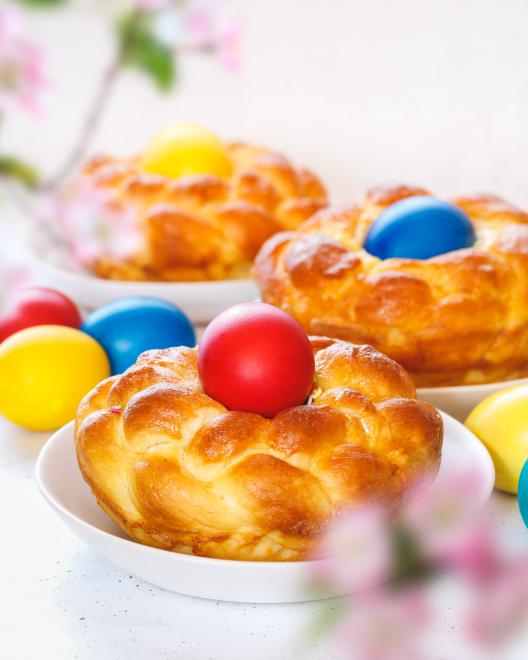


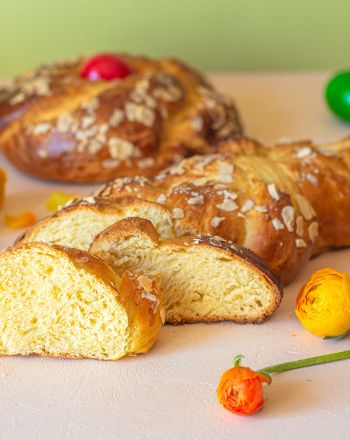
Don’t rush the process! Patience is the key to success and the most important factor in achieving perfect tsoureki. Better not start the whole process if you’re not relaxed or don’t have enough time - not for the preparation itself, but for the waiting stages, which are essential.
Translation | Amaryllis Tsegou
This doesn’t mean standing over the dough the entire time, but merely following each preparation stage carefully and using the waiting intervals for other tasks.
Flour
We use strong (bread) flour, which has higher protein content. Protein forms gluten when mixed with liquids and kneaded, giving the dough elasticity and the ability to rise and become fluffy. We can also use flours labeled “for tsoureki” as well, if available.
Yeast
Yeast, fresh or dry, is essential for an airy, fluffy dough. Yeast microorganisms are activated when mixed with liquid, releasing carbon dioxide, which makes the dough rise and creates air pockets.
Follow the recipe ratios carefully; too much yeast can ruin the dough. For every 500 g of flour, use 20–25 g fresh yeast or 8-9 g dry yeast.
Fresh yeast should be dissolved in lukewarm water with a little flour to make a starter and wait until bubbles appear, whereas dry can be mixed directly to the flour.
Yeast does not like salt, so avoid direct contact, but it does like sugar, which helps activation. A bubbling starter confirms the yeast is active. If it does not rise, discard and start again.
The liquid used to dissolve yeast (water, milk, or a combination) should not exceed 40°C, or it will kill the yeast. You can check the temperature by touch - it should feel warm, not hot.
Everything at room temperature
All other ingredients - eggs, butter, sugar, flour - should be at room temperature. Take them out well in advance, not just at the last minute.
Kneading
- Kneading is essential for developing the gluten network, which affects the dough’s texture and structure.
- If kneading by hand, continue until the dough becomes elastic, smooth and slightly sticky.
- If using a mixer, use the dough hook at low speed. The dough will initially cling to the bowl but will gradually come together, smooth and elastic, gathering around the hook.
How much flour?
After kneading, the dough should feel elastic like chewing gum, soft and slightly buttery - not stiff like bread dough.
Do not add flour to make it easier to handle, or it will tighten and affect the tsoureki texture. Instead, lightly oil or butter your hands to manage the sticky dough.
Resting and rising
Yeast needs time to become activated and the dough must rest to rise. There are the two rising stages: after kneading and after shaping.
The rising time depends on the quantity of dough and the ambient temperature. In a slightly warmed oven at around 40°C, it may take about an hour, while at room temperature it can take three to four hours. If left in the refrigerator, it will still rise but it will happen overnight.
After shaping the tsoureki, place them on baking trays with enough space between them and allow them to rise again until they are nearly doubled in size. This second rise can take anywhere from half an hour to one or even two hours, depending on room temperature and size of the dough.
Shaping
Take care not to pull or stress the dough. When dividing it, use a knife rather than tearing and if you want even strands, it helps to weigh them so they are the same size.
Shape the dough on a lightly greased or buttered surface, with lightly greased hands, using steady, gentle movements. Press lightly without pulling - the dough will stretch naturally if it has been prepared correctly. This process also helps release trapped air, allowing the strands to form properly without large air pockets.
Egg wash
Once the tsourekia have been shaped and have completed their second rise, brush them with a beaten egg yolk mixed with a little water or milk. This gives them a shiny, golden finish after baking. Apply the egg wash carefully, making sure not to pierce the surface, as this could allow air to escape and cause them to collapse.
Baking
If baking several tsourekia at once, it’s best to use a fan oven at 160°C and switch the tray positions halfway through to ensure even baking. The baking time depends on their size and generally ranges from 20 to 40 minutes.
Storage
Once removed from the oven, cover tsourekia with a clean towel. Avoid cutting them before they have cooled completely, as this can cause them to dry out.
After they have fully cooled, wrap them well in plastic wrap to keep them soft and fluffy for several days. They can also be stored in the refrigerator for up to 10 days and in the freezer for up to 3 months.
Our recipe for Greek tsoureki