What does the buttery kourabiedes symbolize, with its roots stretching back to Persia? And how did we go from the simple little breads once made for funeral feasts to the beloved melomakarona we enjoy today? Here’s everything you need to know about the history of traditional Greek Christmas sweets.
Translation | Amaryllis Tsegou
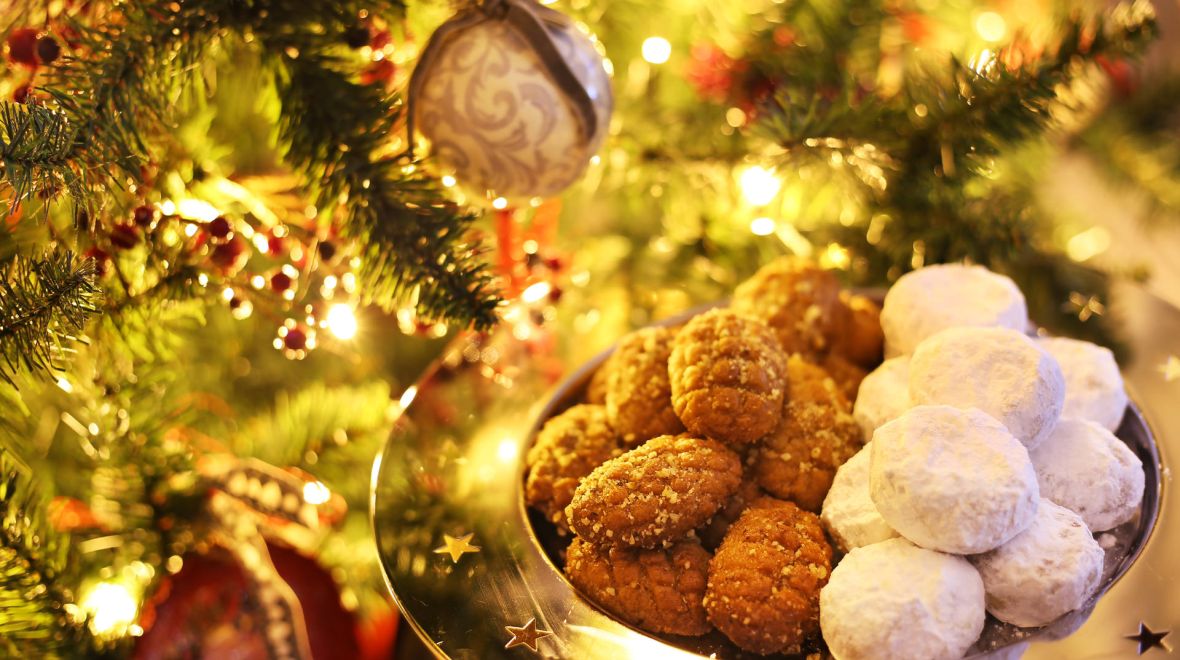
We pile them on every Christmas and New Year’s table, offer them to guests, recognise their aroma from miles away, and lose count of how many we’ve eaten. Three words, countless feelings: kourabiedes, melomakarona, diples. The truth is, most people I know proudly claim team melomakarono, though personally, I can never resist a buttery kourabiedes topped with a whole roasted almond - the most delightful cookie in the world, one I could enjoy year round. We’ve already explored the history of the Vasilopita, which marks the start of the New Year. But since kourabiedes, melomakarona, and diples have been passed down through generations too, each carrying its own history, it’s worth knowing their story too.
Kourabiedes: The sweet that became a symbol of joy and hospitality
Originating in Persia, kourabiedes first appeared in the 17th century, around the time sugar became widespread in the region. They soon became popular throughout Asia Minor and, today, are widely enjoyed in Turkey, Greece, Cyprus, and across the Balkans, with Lebanon also claiming them as part of its culinary heritage.
Over the centuries, kourabiedes evolved into various regional versions. After the 19th century, and especially following the Asia Minor Catastrophe, they became firmly rooted in Greek cuisine. Refugees brought their techniques and recipes with them. One notable example comes from the people of Karvali in Cappadocia, who settled in New Karvali, Kavala, in 1924. They brought along their traditional kourabie recipe, now one of the most famous in Greece.
The word kourabie comes from the Persian qurabiye, meaning “cookie” or “sweet made with flour, butter, and powdered sugar.” In Greece, kourabiedes became established as a Christmas treat, although in many regions they are also served on special occasions - especially baptisms.
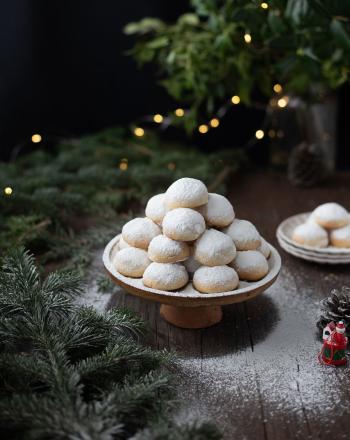
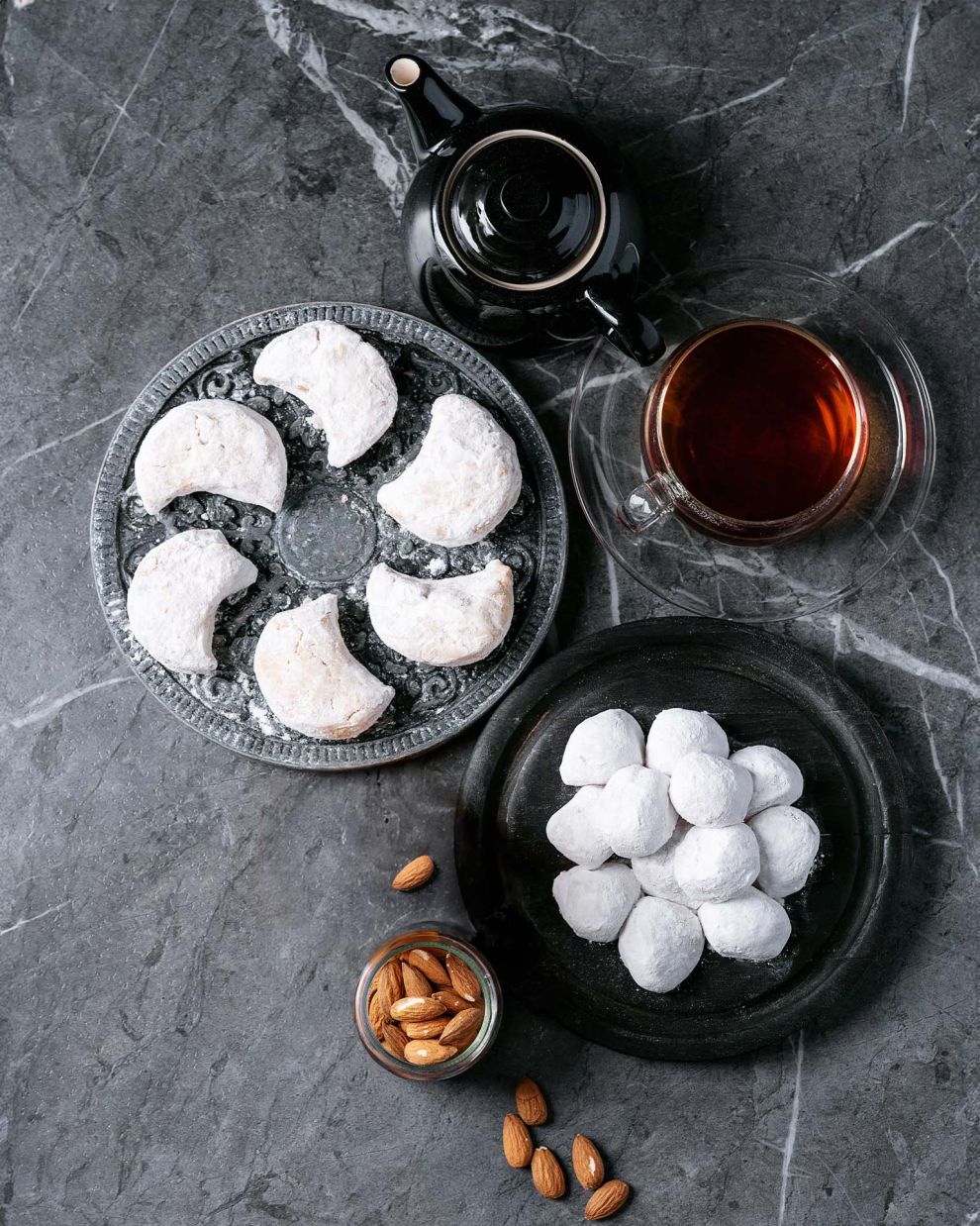
So what exactly are they? A crumbly, buttery cookie made with sheep or cow’s butter (the key ingredient that defines its aroma and overall quality), soft flour, almonds, and a fragrant element such as rosewater or orange blossom water. Some local variations include Chios mastic, mahleb, or cognac.
Their snowy white coating of powdered sugar represents joy and happiness. Over time, kourabiedes have become associated with celebratory moments and are now a symbol of warmth and hospitality. As a tradition, they’re therefore considered essential in nearly every home throughout the holiday season.
Melomakarona: from ritual bread to an irresistible festive dessert
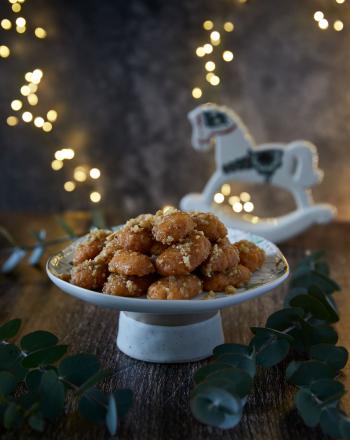
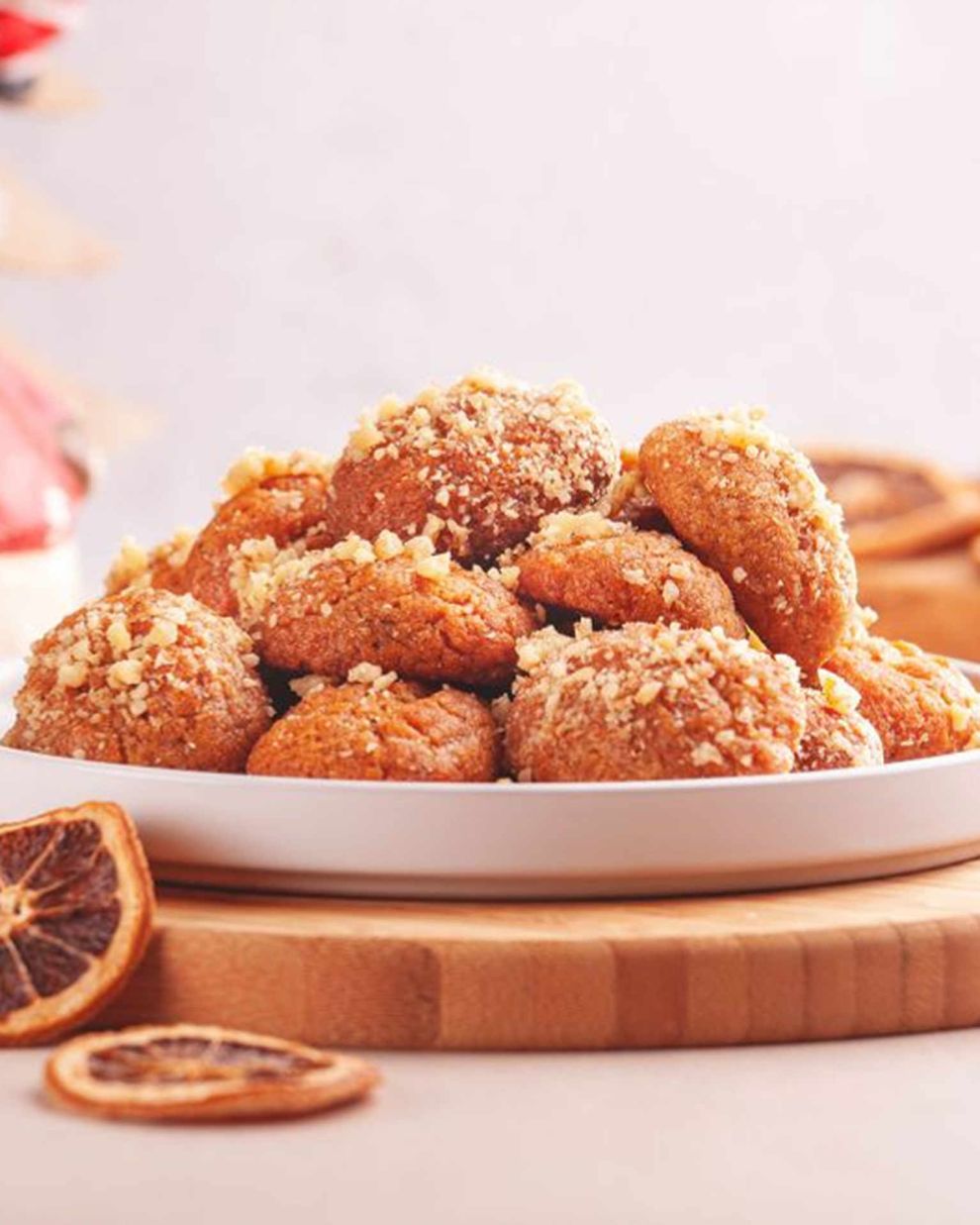
Melomakarona - those honey-soaked, spice-scented cookies no one can resist - belong to a tradition whose origins disappear into ancient history. Much of their story lies in the etymology of the word. Unlike kourabiedes, melomakarona are of Greek origin. However, the root of the name links back to something sorrowful. Melomakarono comes from makaronia, a dish offered during funeral meals to honor the dead. And makaronia itself traces back to makaria - a ceremonial bread made with wheat, oil, and honey, offered in rituals connected to the repose of the soul. It was also known as psycho-pita (“soul pie”). Interestingly, makaria had a shape similar to today’s melomakarono.
Over time, makaria began to be drenched in honey and enriched with spices such as cinnamon and clove. Slowly, it transformed into the melomakarono we know and love today.
Melomakarona were established as a treat for the “Dodekaimero” (the 12 days from Christmas to Epiphany) by Greeks from Asia Minor and Constantinople, who called them foinikia. Moreover, because they contain olive oil rather than animal-based fats, they were also ideal to consume throughout the Christmas Lent.
Although they may have originated from a somber ritual, today melomakarona are a joyful symbol of the holidays. Their warm, aromatic scent fills homes throughout the festive season. They are made with flour, sometimes semolina, olive oil, cognac, sugar, clove, cinnamon, and orange juice. After baking, they are soaked in syrup and finished with plenty of crushed walnuts.
Like kourabiedes, they’ve also embraced modern twists - most often chocolate-covered versions - though the classic interior has remained unchanged for generations. Simple, plant-based, and incredibly flavourful, melomakarona are truly irresistible.

Diples: The sweet of weddings and celebrations
Crisp yet honeyed, topped generously with crushed walnuts, and tied to countless joyful memories, diples are a traditional Greek treat closely associated with both Christmas and weddings. In the Peloponnese, they are the quintessential celebratory sweet, served at festive gatherings, baptisms, and of course, holiday tables.
In Crete, a similar treat called xerotigana is offered - also popular during the holidays. Their main differences from diples are their shape (often spiraled instead of rolled into flute-like forms) and the fact that they are typically made without eggs, making them suitable for fasting periods. Across Greece, diples are prominently featured whenever sweetness and good fortune are symbolically welcomed. But during Christmas, they also fill pastry shops everywhere.
They are made from a thin, sweet dough that is fried and carefully folded into the iconic “diples” - a name that literally comes from the Greek word for “folds.” Once shaped, they are generously drizzled with honey and sprinkled with walnuts.
The combination of fried dough and honey has existed since antiquity. Archestratus - the “father of gastronomy” in the 4th century BC - and other writers of the era mention pastries made from dough that was baked or fried, then served with honey and nuts. Over the centuries, these early sweets began to be folded, eventually evolving into the diples we know today.
3 traditional Christmas recipes