The custom of cutting and sharing Vasilopita on January 1st is one of Greece’s most beloved New Year’s rituals. Beyond its delicious flavor, it carries centuries of symbolism, myth, and religious tradition. Its name, its shape, even the lucky coin inside each slice - everything has a story. And while the exact origins vary across time and place, each version adds another layer to the tale of the pie that marks the beginning of every year.
Translation | Amaryllis Tsegou
There are several theories about the origin of the custom, which has deep roots stretching back to Roman times. In antiquity, the festivals of Cronia (or Saturnalia for the Romans) celebrated the end of the year and the beginning of a new cycle. During these festivities, people baked pies or breads, hiding inside them a coin - or sometimes even gold jewelry - believing that whoever found the token would enjoy the favor of the gods, especially of Cronos, the deity associated with time.
This tradition was later adopted by the Franks, who kept the custom of inserting a coin into festive bread. The lucky person who found it was proclaimed the “King of the Evening.” In some regions, they replaced the coin with a simple bean, and the winner was affectionately called the “bean king.”
In earlier times, other symbols of abundance and prosperity were also baked into the pie: a pomegranate seed for luck and wealth, a walnut for fertility, a sprig of grapevine or olive branch for harvest and growth. In modern Greek tradition, however, these items were eventually replaced by the flouri - usually a small gold or silver coin.
The religious story of Saint Basil
The religious version of the story - now the most widely accepted - connects the Vasilopita to Saint Basil the Great, while he served as bishop of Caesarea. According to this account, the prefect of Cappadocia attempted to seize valuables from residents under the guise of tax collection. In fear, the people gathered their precious belongings to surrender them.
Saint Basil intervened and persuaded the prefect to abandon his plan. But then came the challenge: how could the valuables be returned to their rightful owners? To solve this, the people baked pies, placing the items inside. Miraculously, when the pies were cut, each person received back exactly what was theirs. This is why, according to Christian tradition, the cake is called Vasilopita: it is cut on January 1st, the feast day of Saint Basil, and traditionally contains a coin.
How the ritual works
The cutting of Vasilopita takes place just after midnight on New Year’s Eve or on New Year’s Day. The process follows a ceremonial order: the host scores the top with a cross before slicing. The first pieces are offered symbolically - to Christ, to the Virgin Mary, and to Saint Basil. The next slice is dedicated to the home, and then portions are distributed to each family member and guest.
The hidden coin represents good fortune. Whoever finds it is believed to be blessed with luck and positive energy for the year ahead.
Local variations across Greece
Greece boasts a wide range of Vasilopita styles. In most regions, the pie is sweet, typically resembling a simple cake. In Epirus and Thessaly, however, the Vasilopita is savory, made with multiple layers of dough - symbolizing the months of the year - and filled with cheese, meat, mince, or other ingredients.
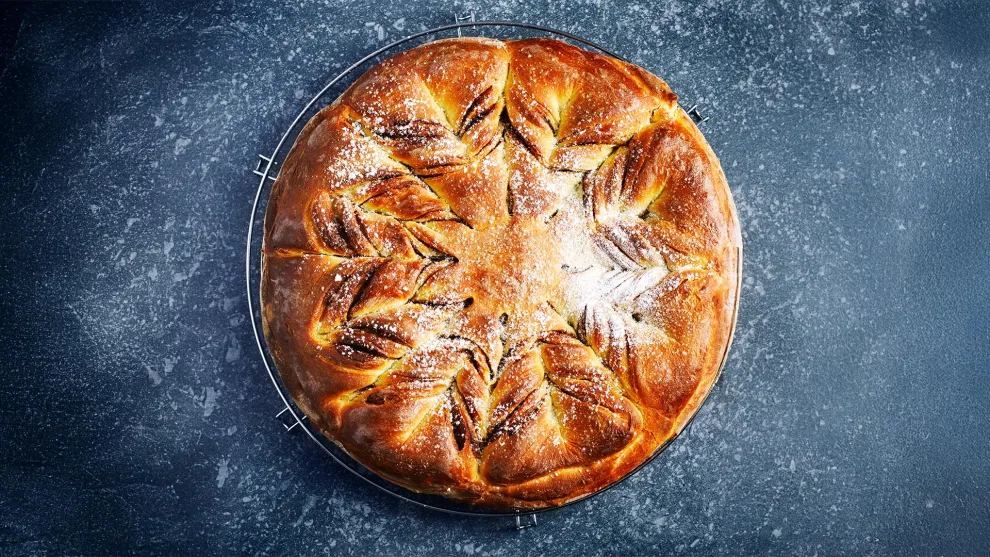
In the Peloponnese, a crustless version was common - rich and creamy, similar to a galatopita. And of course, there is the famous Constantinopolitan Vasilopita, reminiscent of tsoureki, wonderfully aromatic with spices like mahleb, mastic, and nutmeg.
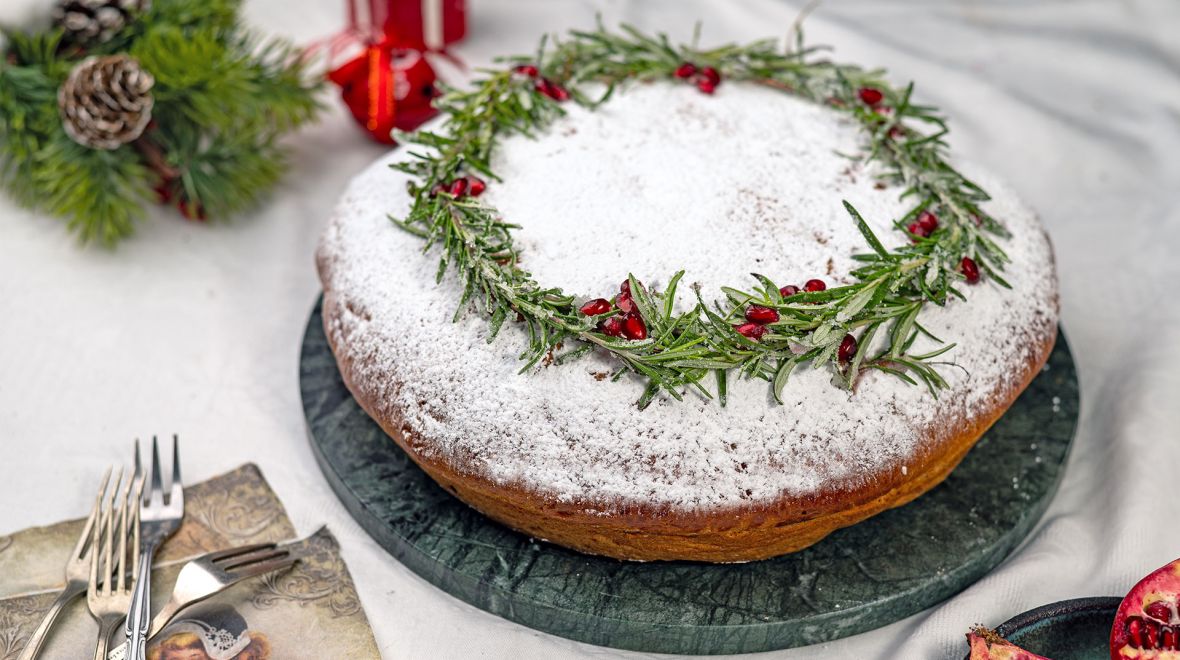
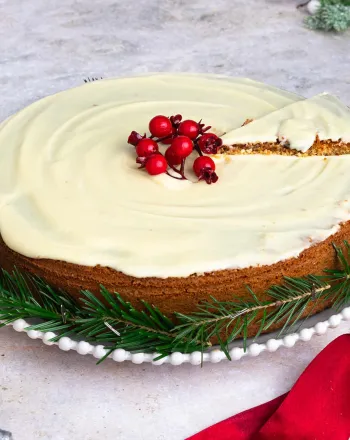
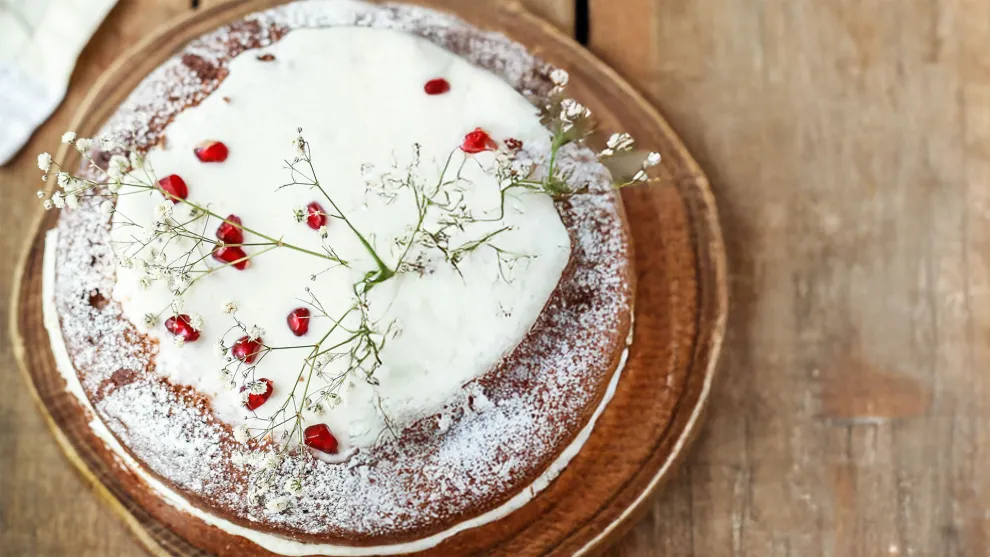
Decoration varies as well. Some dust the top with powdered sugar; others use chocolate glaze or festive toppings. Many people “write” the year across the surface using powdered sugar, nuts, or pomegranate seeds.
It is worth mentioning that back in the day, in rural households, Vasilopita was adorned with dough designs depicting local symbols - homes, animals, patterns - while a sprig of evergreen placed in the center symbolized vitality and prosperity.
In some regions, the pie even contained additional items - wheat stalks, thyme, seeds - predicting abundance in harvests and household goods. Families also prepared a dedicated Vasilopita for their animals, believing that Saint Basil himself would check whether they were well cared for. For that reason, tending to livestock on New Year’s Eve and New Year’s Day was seen as an act of devotion.
Why the Custom Endures
Vasilopita is more than a culinary tradition - it is a ritual of connection. It brings families, friends, and entire communities together around a shared table, exchanging wishes and waiting to see who will be blessed with the lucky coin. Its charm is so enduring that the ritual often continues well into the new year; workplaces, clubs, and associations frequently hold their own pie-cutting ceremonies weeks - or even months - later.
Recipes may change, the style of the pie may differ, the tables and the people gathered around them may evolve through the years, but the custom - adaptable and beloved - remains very much alive.
Our recipe for Vasilopita: