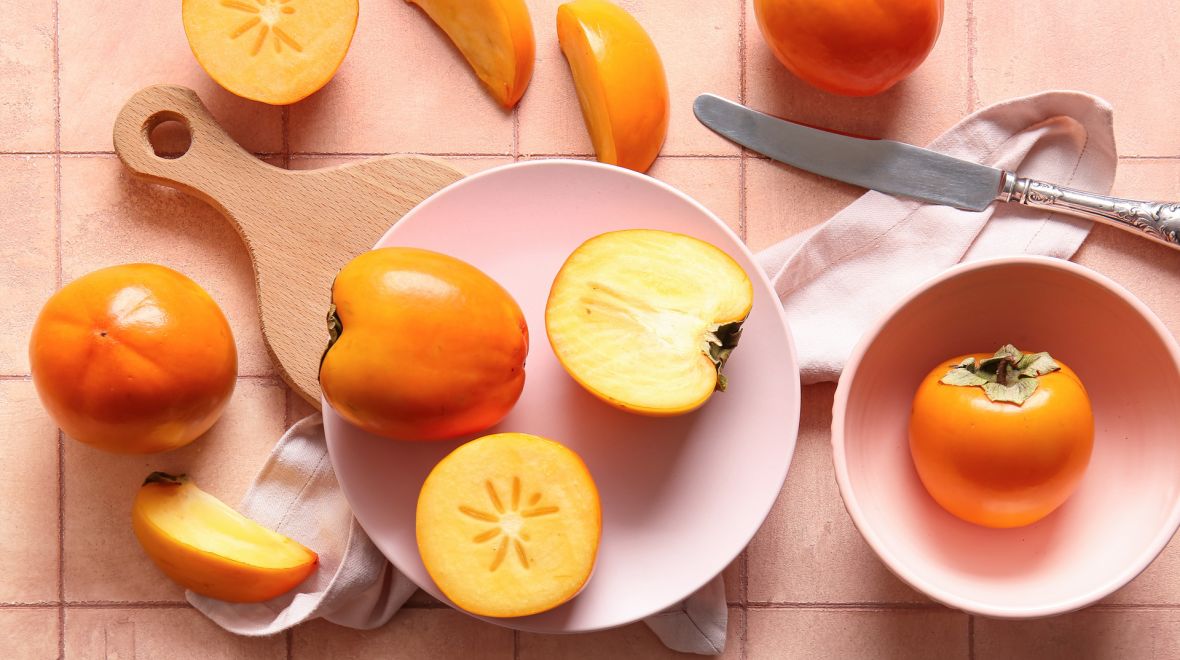

You’ve probably noticed lately - either on supermarket shelves or at local market stalls - an orange fruit that looks a bit like a tomato, yet many people aren’t quite sure what it is. That’s persimmon. It’s an autumn and winter fruit with a naturally sweet taste and high nutritional value.
Although it originates from Asia, it has become firmly established in the Mediterranean diet - and the fact that we now see it widely available in stores is proof of that.
Like most fruits, persimmon is rich in dietary fiber, which supports proper digestive and gastrointestinal function. It also promotes satiety - particularly important for those focused on weight management - and helps regulate blood sugar levels.
Persimmon also contains antioxidant compounds such as vitamin C, beta-carotene, and polyphenols. These nutrients help protect cells from oxidative stress, reduce markers of inflammation and strengthen the body’s natural defenses. A single persimmon provides a large portion of the recommended daily intake of vitamin A, which is essential for healthy vision, immune function and skin health - helping to delay premature aging. In addition, the beta-carotene it contains is converted by the body into vitamin A, offering natural protection against infections and skin damage.
But that’s not all. Persimmon contains a significant amount of potassium, a key electrolyte that helps regulate blood pressure and supports proper cardiovascular and muscular function. Consuming potassium-rich foods helps combat fluid retention and maintain a healthy heart rhythm.
How to enjoy It
Keep in mind that persimmons should not be eaten immediately after harvest, as they need time to ripen fully, otherwise, they can have an astringent taste. As the fruit ripens and its sugar content increases, this astringency decreases, giving it its characteristic aroma and sweet flavor.
You can enjoy persimmon in many ways - in salads, smoothies, yogurt, desserts, or simply on its own as a fresh fruit.
And a bit of history…
In its homeland of China, persimmon was known as the “apple of the East,” while ancient civilizations referred to it as the “god’s fruit” because of its delicate and distinctive flavor.
In ancient texts, including the Odyssey, “lotos” is mentioned as a fruit that caused sweet forgetfulness and euphoria to those who ate it - as was the case with Odysseus’s companions, who couldn’t resist trying it, who couldn’t resist trying it (though it likely referred to a different plant). This association further strengthened its myth as something rare, special and almost magical.