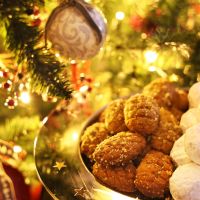

More than ever, the Christmas table is what brings us together. Behind every festive dish lies a wish, a symbol, and often a recipe born of simplicity and resourcefulness - food designed to be shared, to gather people around the table, and to express hopes for a fruitful year ahead.
This Christmas, let’s celebrate in the traditional way, filling our tables with nostalgic recipes that require neither specialist skills nor elaborate techniques. Drawn from Greece’s culinary heritage, these dishes reflect a cuisine rooted in warmth, memory and togetherness.
Christmas Traditions of the Aegean
From island to island across the Cyclades, many customs share common roots, such as the widespread tradition of pig slaughtering; yet, each place retains its own distinctive character.
On Tinos, the most typical custom is the Table of the Brotherhood. Each year, the kavos (the person responsible for the upkeep of the village church), passes his duties on to his successor. This transition is marked by a lavish, all-male feast featuring beef soup, stifado and stuffed vine leaves. Guests bring their own wine, bread and even their own cutlery.
On Naxos, the Christokoutsouro (Christmas log) burns in the fireplace for twelve consecutive days. Its ashes are later scattered over animals and plants as a symbol of good luck. Housewives whitewash their courtyards and bake Christopsomo (Christmas bread) with raisins and walnuts, which is shared not only with family and guests but also with the household animals. Stuffed lamb with wild greens and rice is also prepared.
A mountainous, agricultural island, Naxos honours the tradition of pig slaughtering and is also known for its distinctive local carols, the kotsakia, which are playful, teasing verses performed with musical accompaniment.
On Syros, the island of shipowners, the traditional Christmas boat is decorated as a symbol of the new life brought to earth by Christ. During the Epiphany carols, children walk through the streets holding lanterns made from oranges. On Christmas Eve or Kali Vradiá, as locals call it, families attend the evening service before returning home to a meal of fish with cauliflower.
On Mykonos, pig slaughtering lies at the heart of the festive celebrations, yielding louza, local sausages and pork fat cooked with greens or cabbage. The Christmas table also features melomakarona, foinikia, onion pie with local tyrovolia cheese, honey pie scented with cinnamon, tyrovolia with honey, and two Christopsoma (Christmas breads), one for the family and one for the household animals. The festivities continue on Epiphany with the balosia: traditional dances performed to the sound of violins and bagpipes, a legacy of the Venetian era.
On Paros, Christmas carols are sung on Christmas Eve exclusively by boys. Housewives prepare Christopsomo, milk pie, xerotigana, melachrino (walnut cake) and petimezenia (melomakarona made with grape molasses). They roast hen, stuffed with patouda (red pumpkin), its livers, raisins and cheese. On Christmas Day, chicken, turkey or rooster is traditionally served - all birds that walk backwards, symbolising the departing year, while roast pork is reserved for New Year’s Day.
On Sifnos, the carols differ markedly from those sung elsewhere in Greece. They take the form of playful, improvised verses in the local dialect, sung in the streets from midday until evening on Christmas Eve. The festive table features Christopsomo scented with anise, oven-roasted pork, syglino and other cured meats, pichti, foinikía and diples (also called avgokalámara).
On Serifos, carolling follows an entirely different custom: on Christmas Eve night, only the men of the household sing the carols as they make their way to the priest’s home to offer their bounamás (gift). Christmas Day itself is marked by a lively village feast.
On Santorini, the festive table always includes fava (creamed yellow slit peas), broad beans and tomato fritters. In the past, schoolchildren would visit their teacher, sing carols and offer the Kalichéra, the traditional Christmas gift.
On Kythnos, Christopsomo is baked with anise and mastic, while on Antiparos mastic-flavoured cookies are prepared.
Andros is famous for its kourabiedes, fragrant with orange blossom water and generous amounts of almonds. Melomakarona are equally popular, as is pasteli, traditionally eaten on New Year’s Day to ensure a sweet year ahead.
On the first day of the year, Amorgos serves koftó (wheat cooked with onion, cheese and olive oil) as a wish for a good harvest.
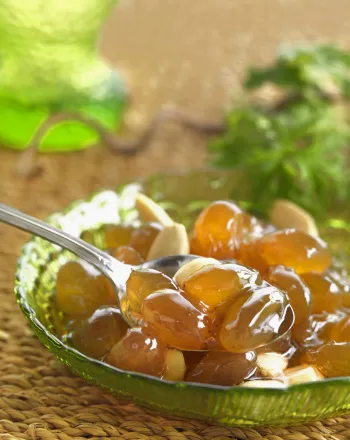
Finally, on Anafi, kouféto is prepared: a spoon sweet made from blanched almonds and pumpkin boiled in honey. On this island, Christopsomo is scented with wild saffron (zaforistó), which grows locally.
Christmas Celebrations in the Dodecanese
Across the islands of the Dodecanese, pork is an essential part of the festive table, along with cumin scented stuffed vine leaves known as sarmadakia, a celebratory dish shared throughout the region, and diples, which are equally indispensable.
On the island of Rhodes, on Christmas Eve, young women place a dish of wheat at the centre of the table, with a sprig of glyfóni (pennyroyal mint), standing upright in the middle. They burn incense over it and pray to Christ. At midnight, virtuous girls are said to witness the dried branch turning green and sprouting anew. In Archangelos, Christopsomo (Christmas bread) is first taken to the church, while the festive table is laid from the night before and decorated with the Christmas bread, honey and an abundance of nuts.
Podariko, the first footing of the year, is also marked with its own celebration. The family chooses one of its members and seats them in the middle of the room, feeding them walnuts and honey as music, dancing and merriment unfold around them. If the year proves to be a good one, the same person is chosen to perform the podariko again the following year. Pig slaughtering in Rhodes is accompanied by exuberant feasting, with favourite meze including milla and tsiríngia, made from pork fat fried until only small, crisp pieces of meat remain.
On Kos, people prepare kouloures, xýsmata, wheat breads made with mizithra cheese and herbs, and afréna, breads made with seven leavenings. On Christmas Day, young and old alike go out together to sing carols and exchange wishes of “T’ apochrónou!” meaning “Until next year!”, receiving treats in return such as kourabiedes, melomakarona, rustic local wine and savoury meze. Interestingly, pork here is known as paskátiko, since Christmas on Kos is referred to as Pascha (Easter). Instead of baklava, locals prepare sarmousádes, made with phyllo, sprinkled with sesame seeds, fried into rolls and served soaked in honey syrup.
On Astypalaia, during the Christmas period, people hang the lower jawbone of the slaughtered pig above the fireplace to protect the household from kallikántzaroi, the mischievous goblins believed to appear during the Twelve Days of Christmas.
On Symi, festive baking begins as early as 12 December, on Saint Spyridon’s day. Traditional treats include panierákia (tarts filled with walnuts), Kopenghagi, svíngoi, baklava, kourabiedes made with ash water which gives them their distinctive crunch, and poungia, small parcels filled with sesame.
On Karpathos, Christmas is celebrated with rooster or pork cooked with leeks. On Christmas Day, after the morning service, families drink a strengthening broth made from the poultry that is cooked later that evening.
Christmas in Crete
Pig slaughtering, a custom that has endured since antiquity, is Crete’s most important Christmas tradition. The family pig is slaughtered every Christmas Eve to prepare their local smoked apaki, cured syglino, local sausages with vinegar, tsigarídes (small pieces of fat cooked with spices), omathiés (intestines stuffed with rice, liver and raisins), and , a meat aspic made from the head and scented with bitter orange. These dishes form the backbone of the festive table, along with meat roasted over lemon leaves.
From the pig’s entrails, soothsayers predict what the coming year will bring, and nothing from the animal goes to waste. Even the bladder is turned into a ball for the children. On Christmas Eve night, the housewives begin kneading the festive dough in a large basin and, as it rises, everyone celebrates the moment of Christ’s birth.
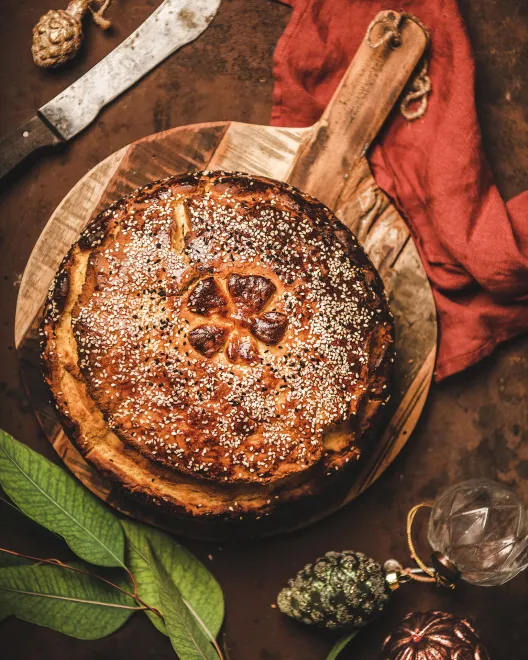
Christopsomo, kneaded with cinnamon, honey, rosewater, sesame seeds and cloves, is the ceremonial bread and the centrepiece of the celebration. Its surface is decorated with elaborate symbolic motifs such as leaves, birds, crosses, snakes believed to bring good luck, and nuts. On Christmas Day, the head of the household makes the sign of the cross over the bread, breaks it and shares it with the family. The ritual symbolises the Last Supper, Christ offering the bread of life to the faithful, and Holy Communion.
During the festive season, sweets take centre stage. Xerotýgana, kourabiedes, whose powdered sugar symbolises the snow on Crete’s mountains, myzithrópites, katiméria, sarikópites, loukoumádes and, above all, koumpanákia or loukoumia are ever present in the home. Served to children singing carols and to passersby, these sweets bear no resemblance to classic loukoumi. Instead, they are small pieces of yeast leavened dough, fried and drenched in grape molasses, honey, sesame seeds, cinnamon and cloves. They are eaten on New Year’s Day with the wish that the year ahead will be sweet.
On the eve of Epiphany, everyone on Crete eats palikária or ospriáda, a mixed legume dish. Tradition holds that on this night the heavens open and animals gain the power of speech to voice their complaints to God. For this reason, people kept their mouths busy with the dish, mixing some of it with straw and scattering it in their fields with the hope that crops would thrive and birds would be satisfied and not peck at newly sprouted seeds. On the same day, the animals’ bells are gathered and taken to the church to be blessed by the priest.
Serenading in the Ionian Islands
On Kefalonia, people do not wish one another “Happy New Year”, but instead say “Kali Apokopí”, meaning a good break from the old year. Homes are decorated with branches of myrtle and strawberry tree (arbutus). On New Year’s Eve, everyone pours into the streets, sprinkling one another with cologne and singing, “We’ve come with roses and blossoms to wish you many years”. Here too, the Christopsomo is decorated with a seal, walnuts, almonds and five extensions symbolising the hand of Christ. The head of the household sprinkles the bread with three drops of olive oil and recites the blessing: “Christ is born, and the light increases.”
On Zakynthos, Christmas Eve is a fasting day and is marked simply, with broccoli, olives and wine. On Christmas Day, the table features avgolemono, an egg and lemon soup with meat or poultry, as well as meat cooked with potatoes. Zakynthian kouloura, which is cut on Christmas Day rather than on New Year’s Day, is a labour intensive yet aromatic festive bread, richly scented with orange, mastic, cinnamon and anise, and made with wine, cognac, raisins, pine nuts and walnuts. The recipe is a legacy of the Venetian era and an important part of the island’s culinary heritage. On New Year’s Day, people sing the Ai-Vasilides in the streets, Zakynthos’ improvised local carols, while New Year’s Eve is celebrated with blaounes, fried fritters dipped in grape molasses.
In Lefkada, during the festive days everyone goes out searching for koutsounes, the wild onions, which are believed to bring good luck and are used to decorate homes. Another legacy of Venetian rule, Diana brings the entire island out into the streets, following the Philharmonic band from as early as four in the morning on New Year’s Day. Among them are the Doratzides, who entertain the crowds with playful pranks.