In recent years, organic olive oil has evolved from a niche choice into a fast-growing category attracting worldwide interest. However, there is often confusion surrounding the term “organic”: is it simply a marketing label, or does it reflect meaningful differences in production, quality and taste?
Translation | Amaryllis Tsegou
Let us take a closer look at what organic olive oil really is, the European legislative framework governing it, what it means in practice for producers and consumers and how it affects the tasting experience.
What is organic olive oil?
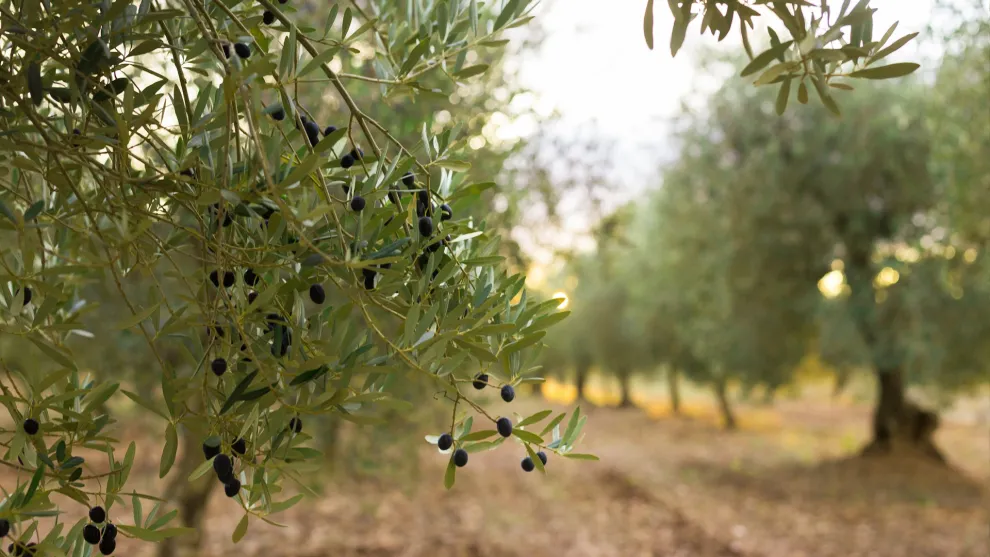
Simply put, organic olive oil is olive oil produced from olives cultivated without the use of synthetic chemicals, such as pesticides, herbicides, or chemical fertilizers. Instead, producers rely on natural methods such as organic fertilization, compost, and mild interventions to protect the fruit (for example, kaolin clay).
What is important to understand, however, is that the term “organic” mainly refers to the cultivation process and not the final taste result. In other words, it does not describe quality, but rather the way the product is produced.
And that distinction is very important. Not every organic olive oil is necessarily extra virgin - and therefore not every organic olive oil is automatically high quality.
The European framework
In the European Union, what qualifies as “organic” is not a matter of interpretation or marketing. It is regulated by strict rules, with Regulation (EU) 2018/848 serving as the main framework. For an olive oil to carry the label “organic,” specific conditions must be met at every stage of production.
The olive grove must be cultivated using organic practices for a transition period - usually three years - before the product can receive certification. During this time, producers already follow organic methods, but they cannot yet market the product as organic.
At the same time, traceability requirements are particularly strict. Every stage is documented, from the field to the olive mill and from there to bottling. Organic olive oil must be processed in certified facilities that follow strict separation and traceability protocols.
Inspections are regular and often unannounced. Certification bodies take samples, check for residues and ensure compliance with all specifications. In short, “organic” in Europe is not a vague claim. It is the result of strict processes, controls, and compliance.
Consumers have access to this information, provided they know where to look. The most recognizable element is the green European logo featuring the leaf made of stars. Its presence is not decorative - it is mandatory on all prepackaged organic products. Next to it appears a certification code, such as “GR-BIO-01,” indicating the organization responsible for the inspection. The label usually also states whether the agricultural ingredients originate within the European Union, outside it, or from a specific country.
By contrast, terms such as “natural,” “traditional,” or “pure” carry no legal weight and offer no guarantee regarding organic cultivation or even olive oil quality.
Organic cultivation is not simply a milder version of conventional farming. It is a different philosophy altogether. Producers are encouraged to work with nature rather than against it and this has practical consequences. Production is often more demanding and more expensive. Yields may be lower, while managing diseases and pests affecting olive trees requires greater knowledge and attention.
On the other hand, the environmental footprint is clearly lighter. Soil fertility is preserved, groundwater is protected, and biodiversity is strengthened. For many producers, organic cultivation is not merely a technical choice, but a way of life.
And what about the taste?
This is where the biggest misunderstanding arises. Many people believe that organic olive oil automatically has a “special” or “superior” taste. In reality, the flavor of olive oil is determined by many other factors.
The olive variety, the ripeness of the fruit at harvest, the extraction method, temperature, filtration and storage conditions all influence the final flavor profile far more than whether the olives were organically cultivated.
An organic olive oil may be balanced and complex, with intense fruitiness, bitterness, and a peppery finish - but it may also be flat or display defects. Organic, therefore, does not necessarily mean superior quality or taste.
Organic and extra virgin: two different concepts
One of the most important distinctions consumers should understand is that “organic” and “extra virgin” are not the same thing.
“Extra virgin” is an official quality category. It means the olive oil has passed chemical and sensory evaluations and contains no defects. It must display specific characteristics such as fruitiness, bitterness, and pungency.
“Organic,” on the other hand, refers to the cultivation and production method. Ideally, of course, the two are combined. A high-quality organic extra virgin olive oil brings together both environmental awareness and sensory excellence.
For consumers who want to make an informed choice, a broader perspective is needed. Seeing the word “organic” on a label is not enough. It is worth checking whether the olive oil is extra virgin, examining its origin, and looking for details such as harvest period, cold extraction, and production date. As with all fresh products, the fresher the olive oil, the better.
Extra virgin olive oil is a fresh, delicate product that should be stored properly and consumed while fresh - ideally within a year of production.
Packaging also matters. Light and oxygen are among olive oil’s greatest enemies. Dark glass bottles or metal containers offer better protection. And whenever possible, tasting remains invaluable. Olive oil is, after all, mainly a sensory experience.
Is organic olive oil ultimately better?
The answer depends on how we define “better.” If we are talking about environmental impact and cultivation philosophy, then yes - organic olive oil has clear advantages. But if we are talking exclusively about taste or quality, the answer is less straightforward.
Quality in olive oil is the result of care, expertise and attention to detail at every stage of production. Organic cultivation can be an important part of that process, but it is not the only factor.
Today, organic extra virgin olive oil is steadily gaining recognition in the world of fine gastronomy. It is increasingly found in fine dining restaurants and curated tastings.
For professionals, however, the organic label alone is not enough. Most approach olive oil with far greater precision. They seek balance, aromatic complexity and a long finish. They look for a product capable of elevating a dish through either complementary or contrasting pairings with food.
Organic olive oil is not simply a trend. It is a choice connected to values such as respect for nature, sustainability, health, and well-being. But producing a truly exceptional extra virgin olive oil requires more than certification alone. It demands knowledge, experience and a deep understanding of the product.