Christopsomo, the traditional Greek Christmas bread, is a fragrant, spiced bread that delights with its aroma and stunning appearance on the festive table. Baking this bread is more than preparing a meal - it’s a ritual that brings the family together and embodies wishes for health, abundance, and prosperity.
Translation | Amaryllis Tsegou
Bread has been one of the oldest and most important symbols in celebrations and offerings. The tradition of baking bread for special occasions dates back to ancient times, when Mediterranean cultures - including the ancient Greeks - linked the life cycle to the cycle of wheat.
In Christian tradition, bread gained special significance, symbolizing the body of Christ. Ancient “holy breads,” often crafted in symbolic shapes, were offered to gods or used in bloodless sacrifices, a practice that continued into Christian feasts.
Each celebration has its own special bread, and at the Greek Christmas table, Christopsomo takes center stage. Both the bread itself and the process of making it express hope for health, prosperity, and well-being. Its religious and symbolic significance means it is prepared with the best ingredients a household can provide.
Traditions and regional variations

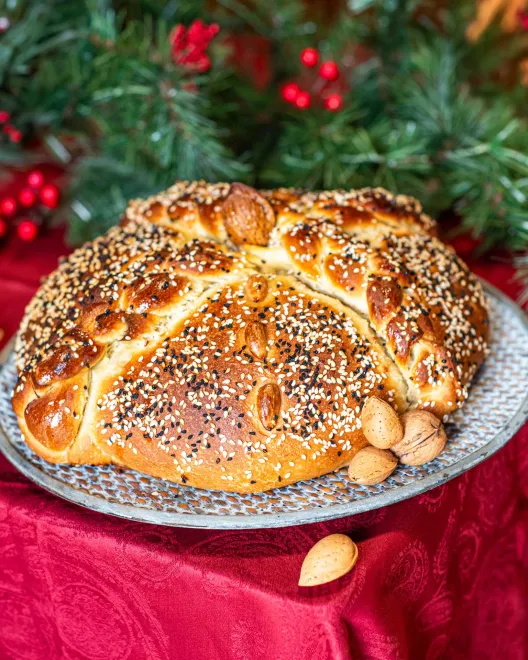
Christopsomo is slightly sweet, aromatic, and often includes wine, cognac, or other spirits. Recipes and decorations vary by region, reflecting local customs. Traditional Christopsomo often features intricate dough decorations, some of which often include crosses, Christ’s monogram, flowers, agricultural tools, animals, and human figures. Whole nuts, raisins, almonds, and seeds are also used to decorate the surface.
Some loaves are simple, while others include complex designs depicting everyday life or the family’s profession, carrying wishes and stories.
Christopsomo is considered an essential of the Christmas table. Traditionally, it is kneaded on Christmas Eve or a few days earlier, and in some regions, they cut it on New Year’s Day or Epiphany. The cutting of the bread is a small ritual in itself, with blessings, incense, and the sign of the cross. The first piece is dedicated to Christ, while the rest is shared among everyone present.
In some areas, like Corinth, it’s customary to hide a coin inside the Christopsomo, adding an element of luck and prosperity - much like the Vasilopita. Beyond its religious meaning, this tradition is also linked to the Last Supper, where Christ shared bread with His disciples.
Recipe features
To make the perfect Christopsomo, use high-quality flour (ideally hard wheat), fresh sourdough starter or yeast, and premium spices such as anise, mahleb, mastic, or cinnamon.
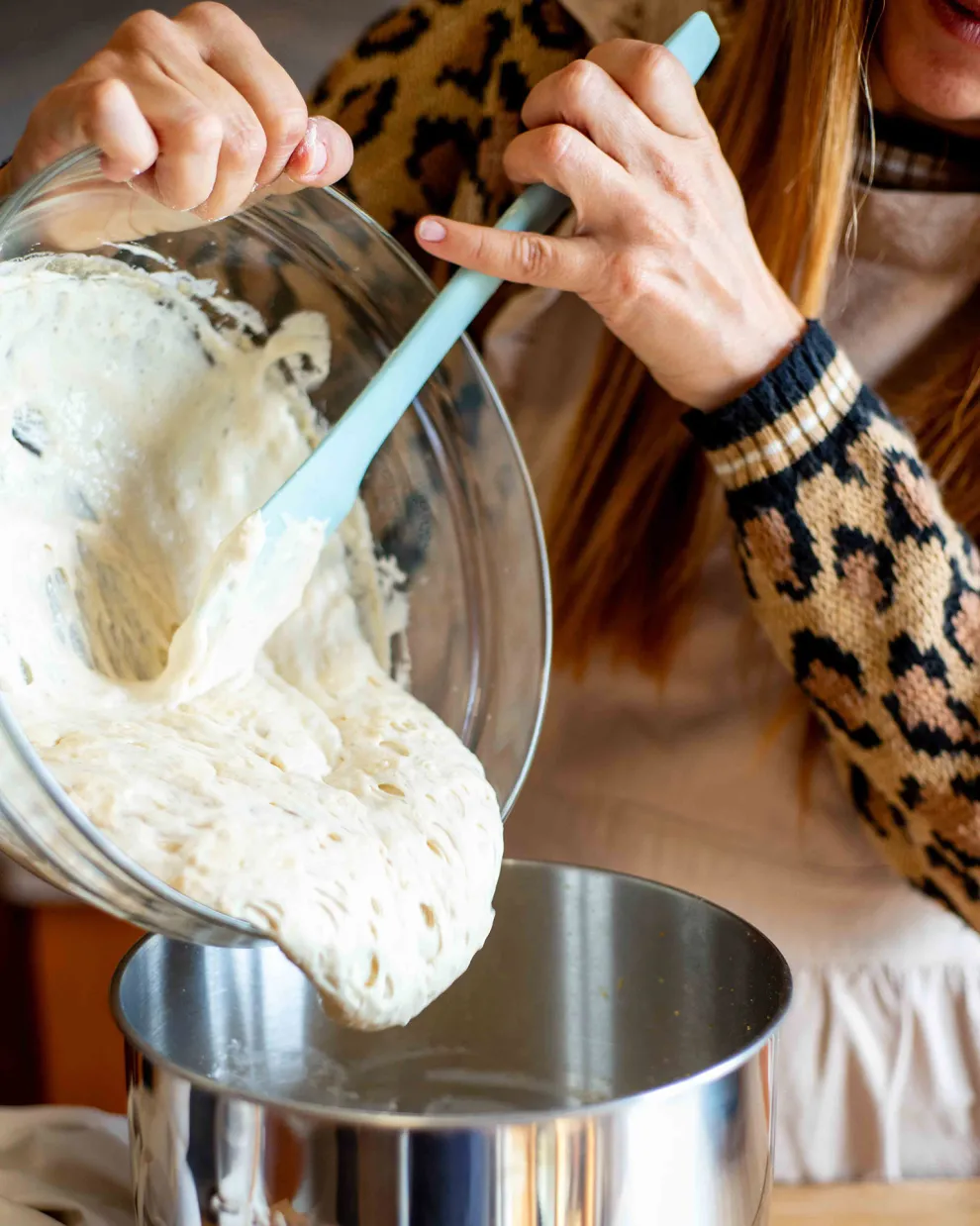
Sourdough preparation: Make the starter the day before to allow it to be fully activated and risen before adding it to the dough.
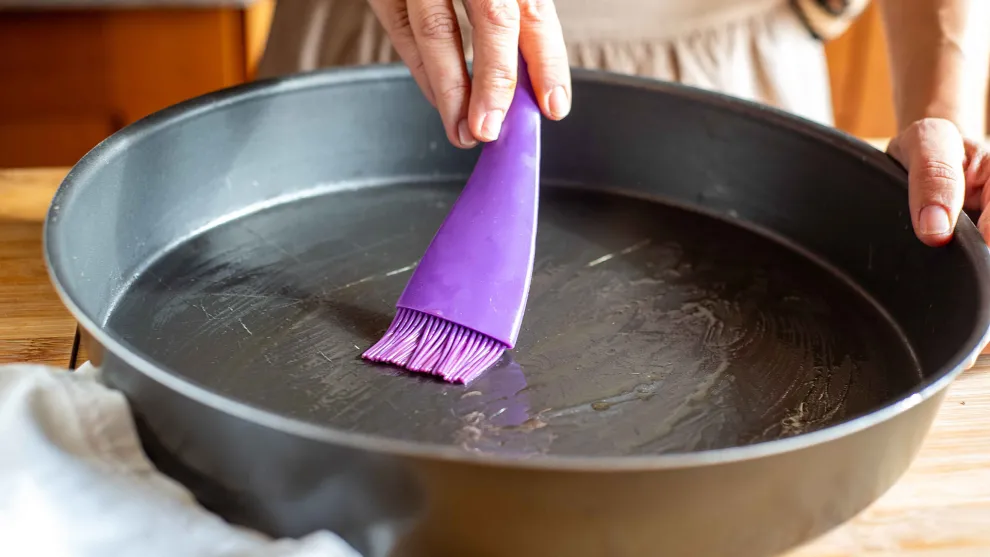
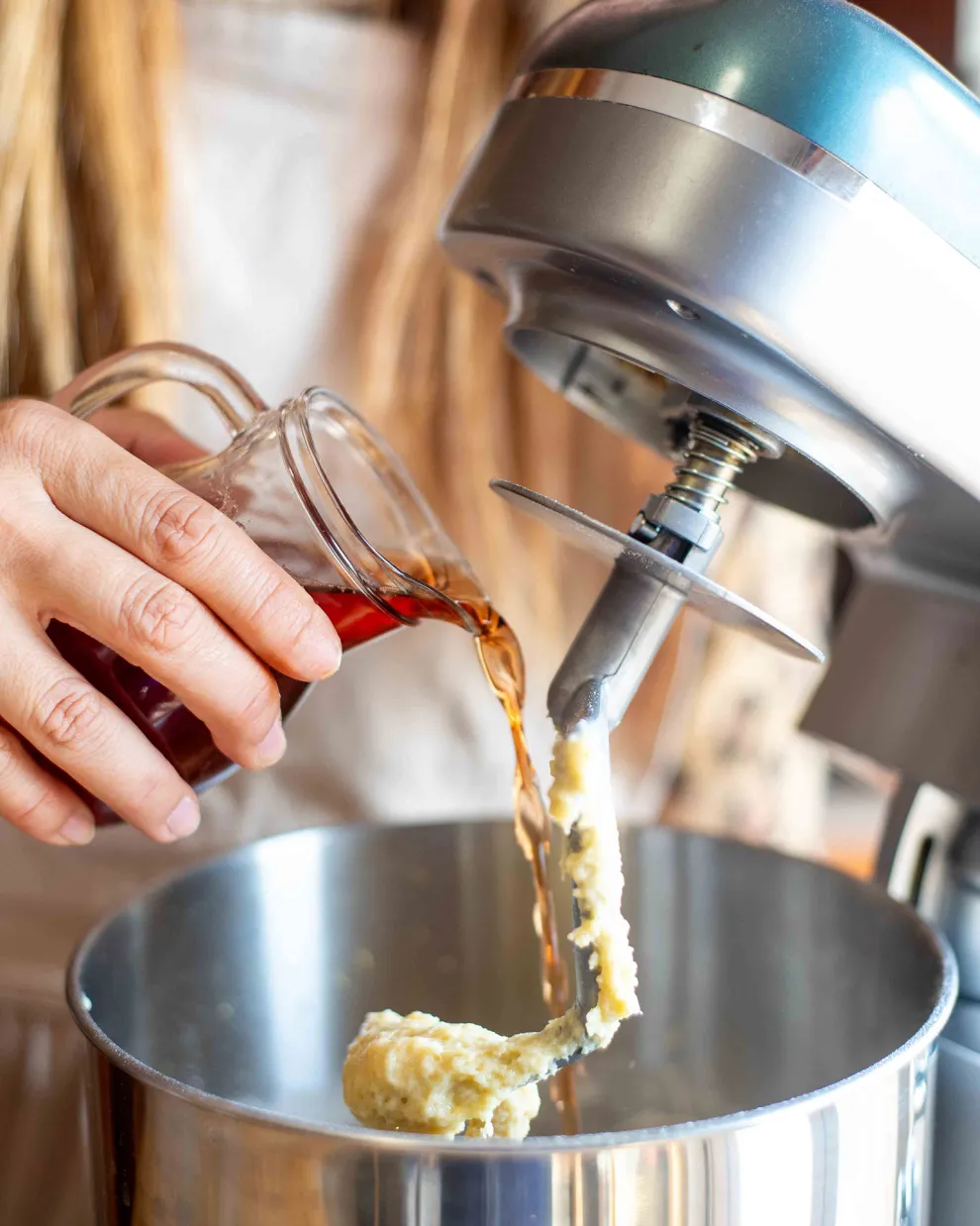
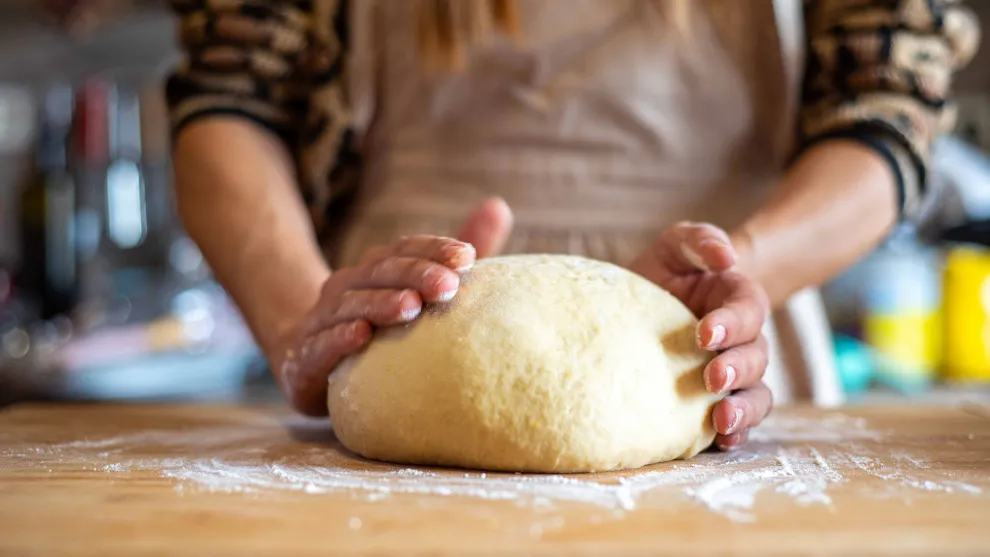
We focus on kneading the dough well so it becomes elastic and uniform. Proper kneading helps the yeast activate and develops the gluten - for ease, use a stand mixer fitted with a dough hook.
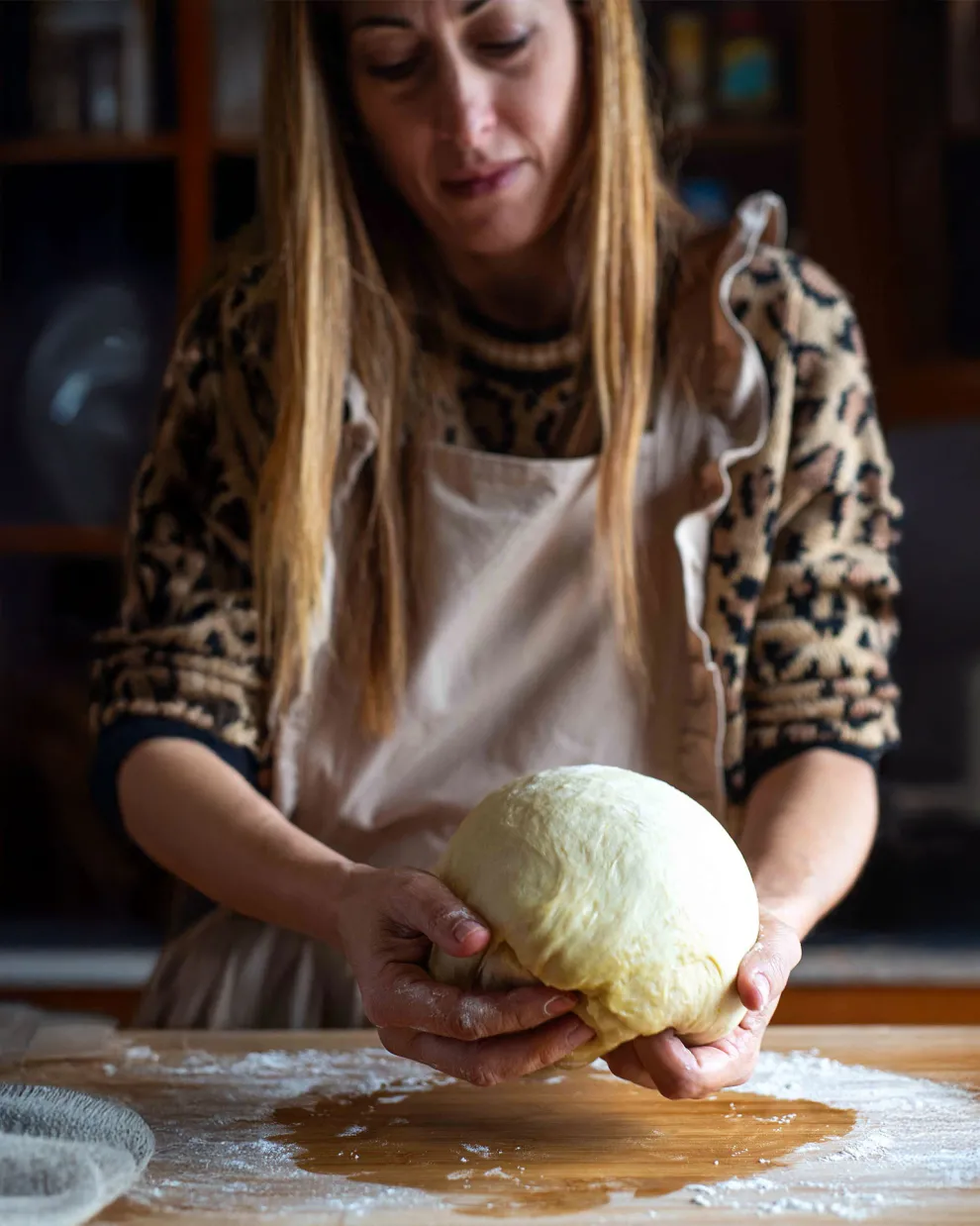
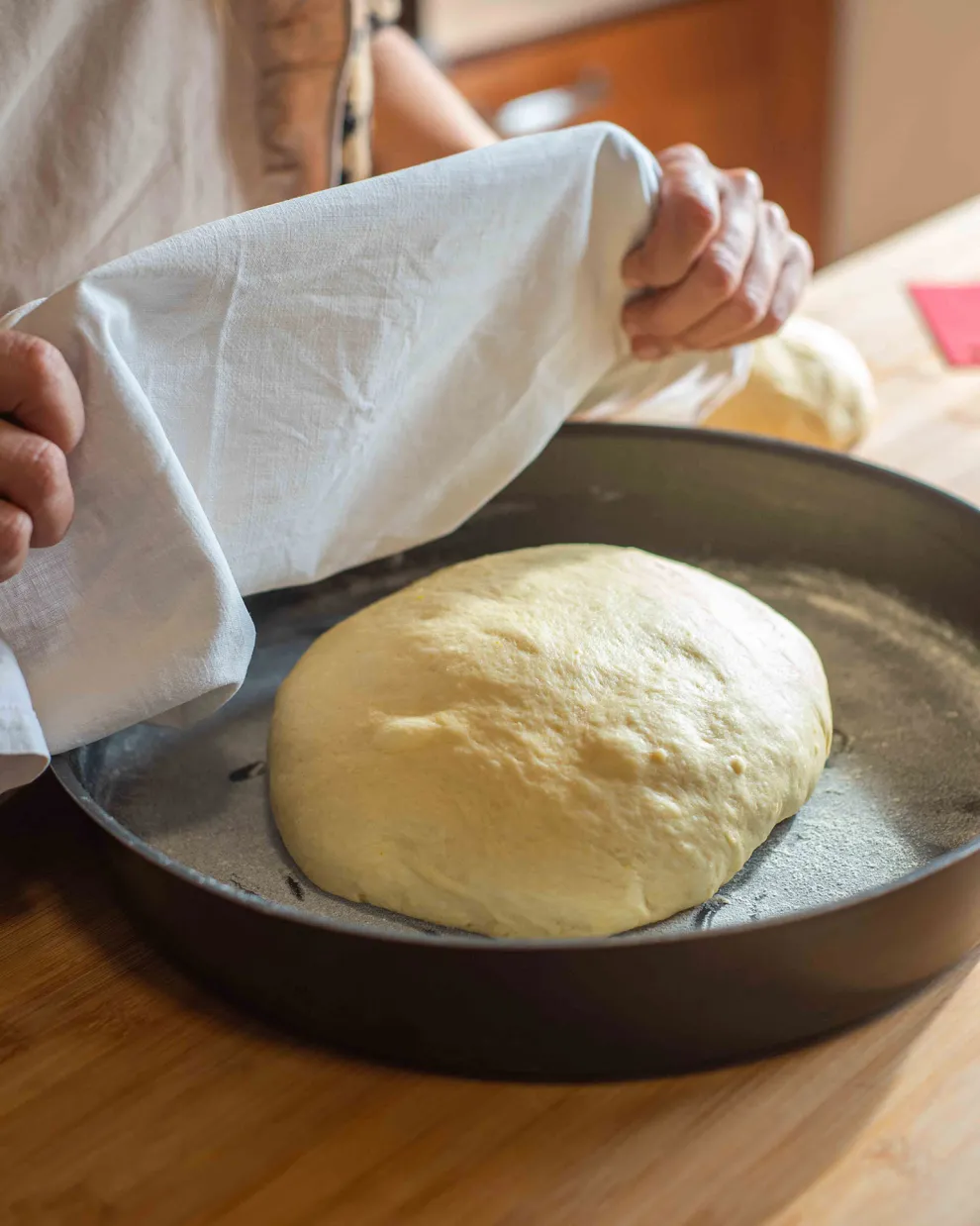
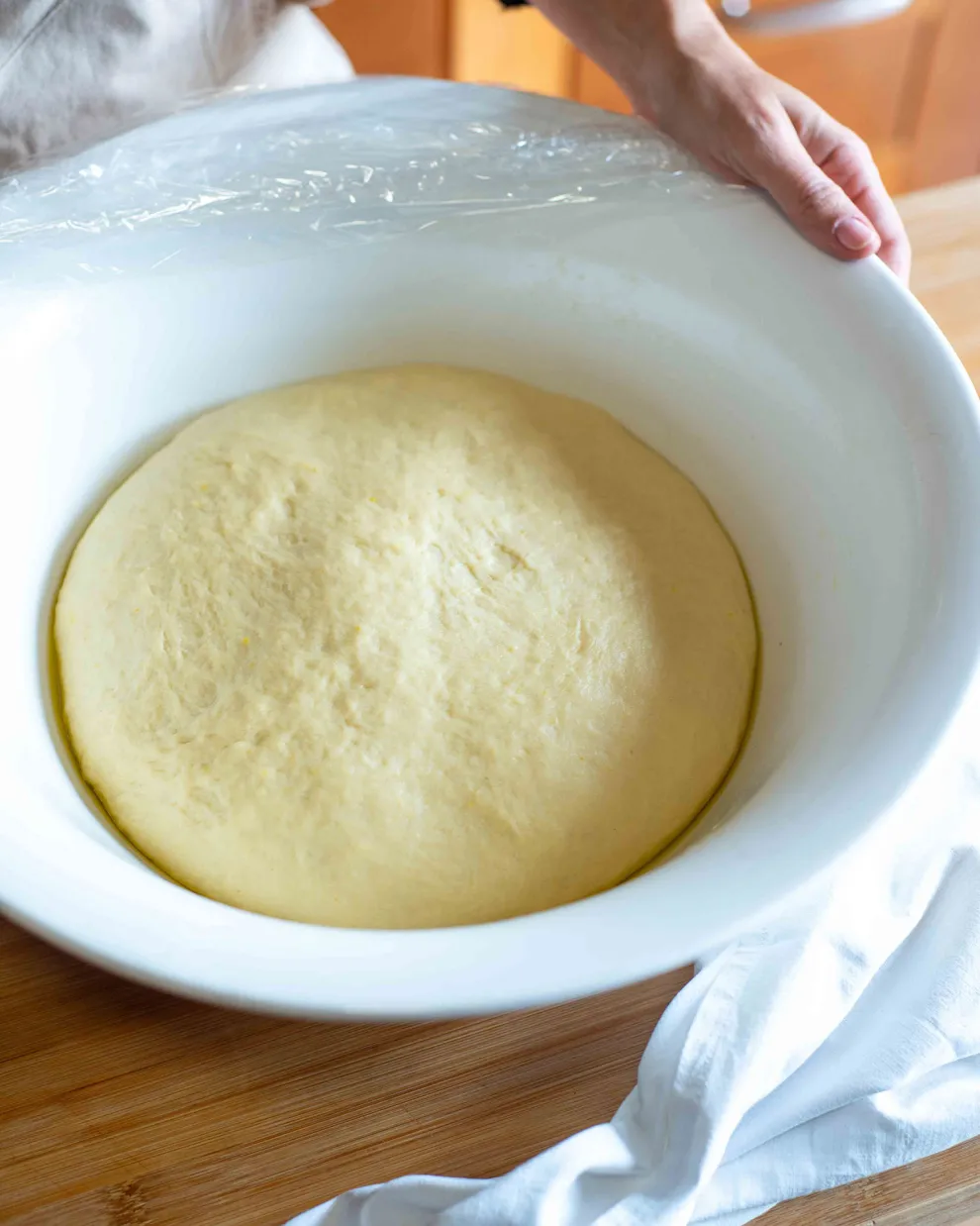
This bread needs time to come out right. The dough should rise in a warm place, covered with a towel or plastic wrap, for about 2 hours, until it doubles in size.
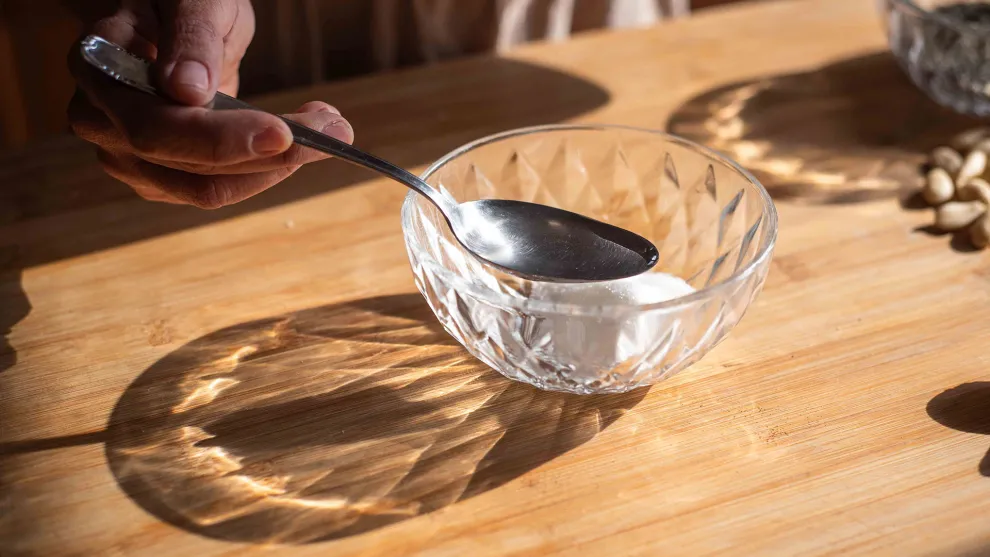
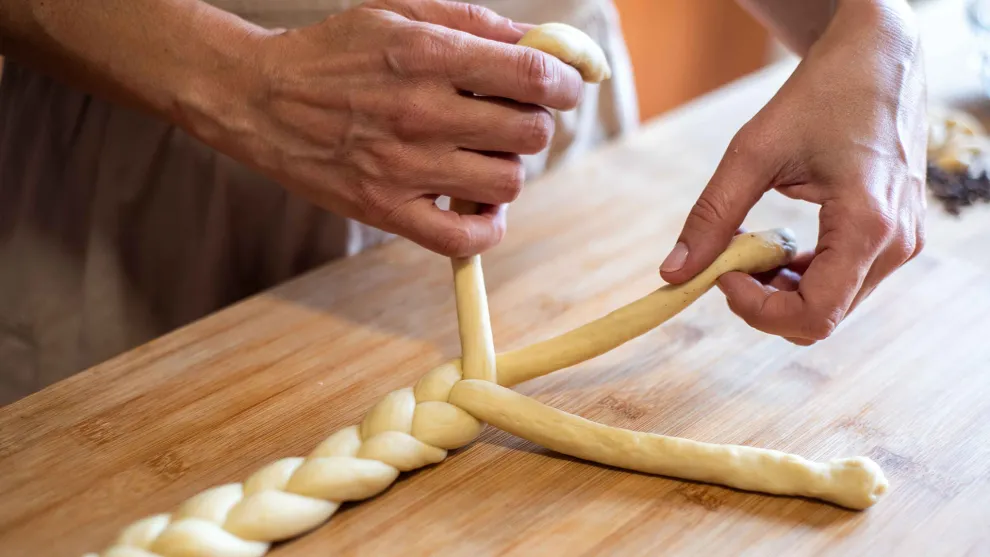
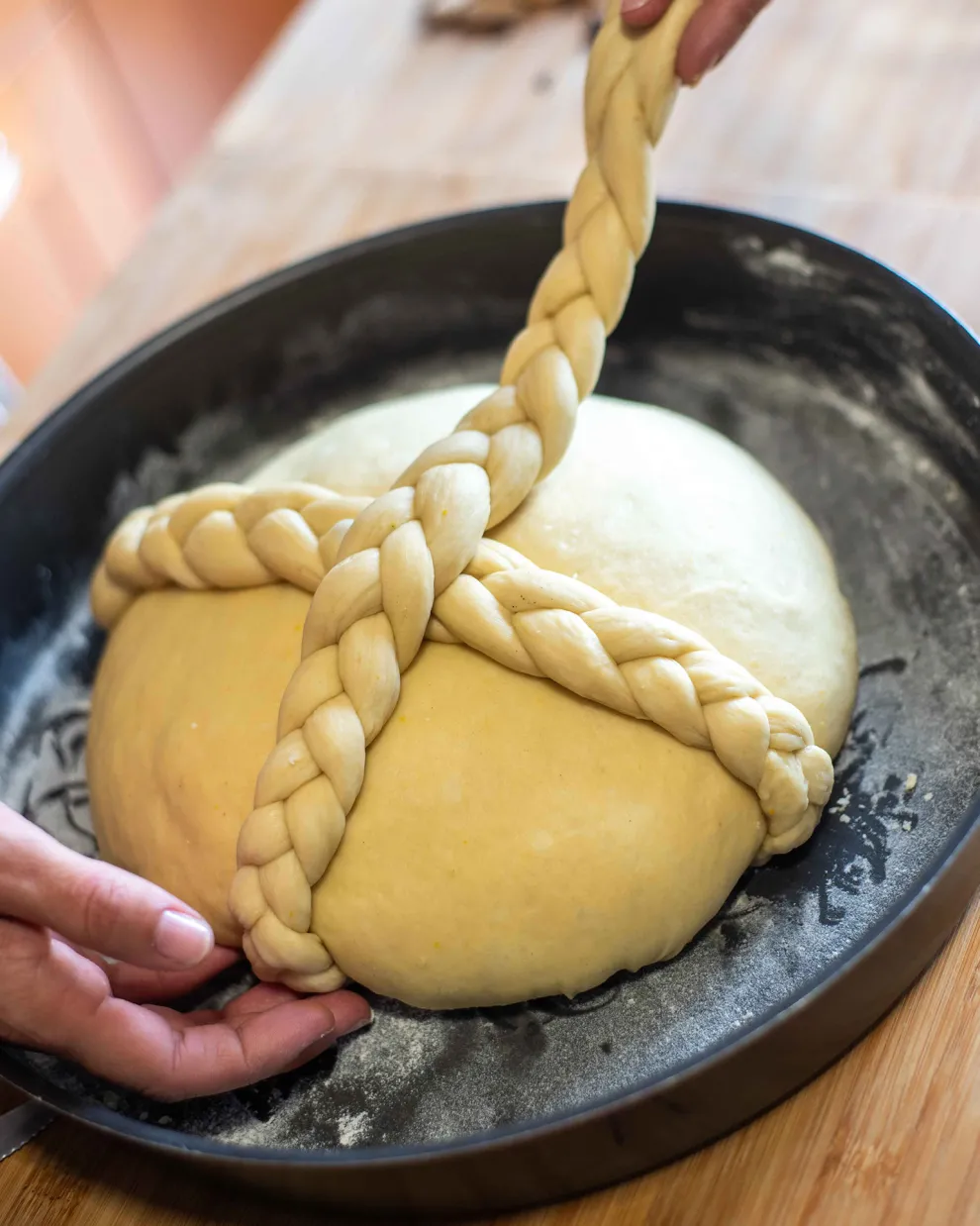
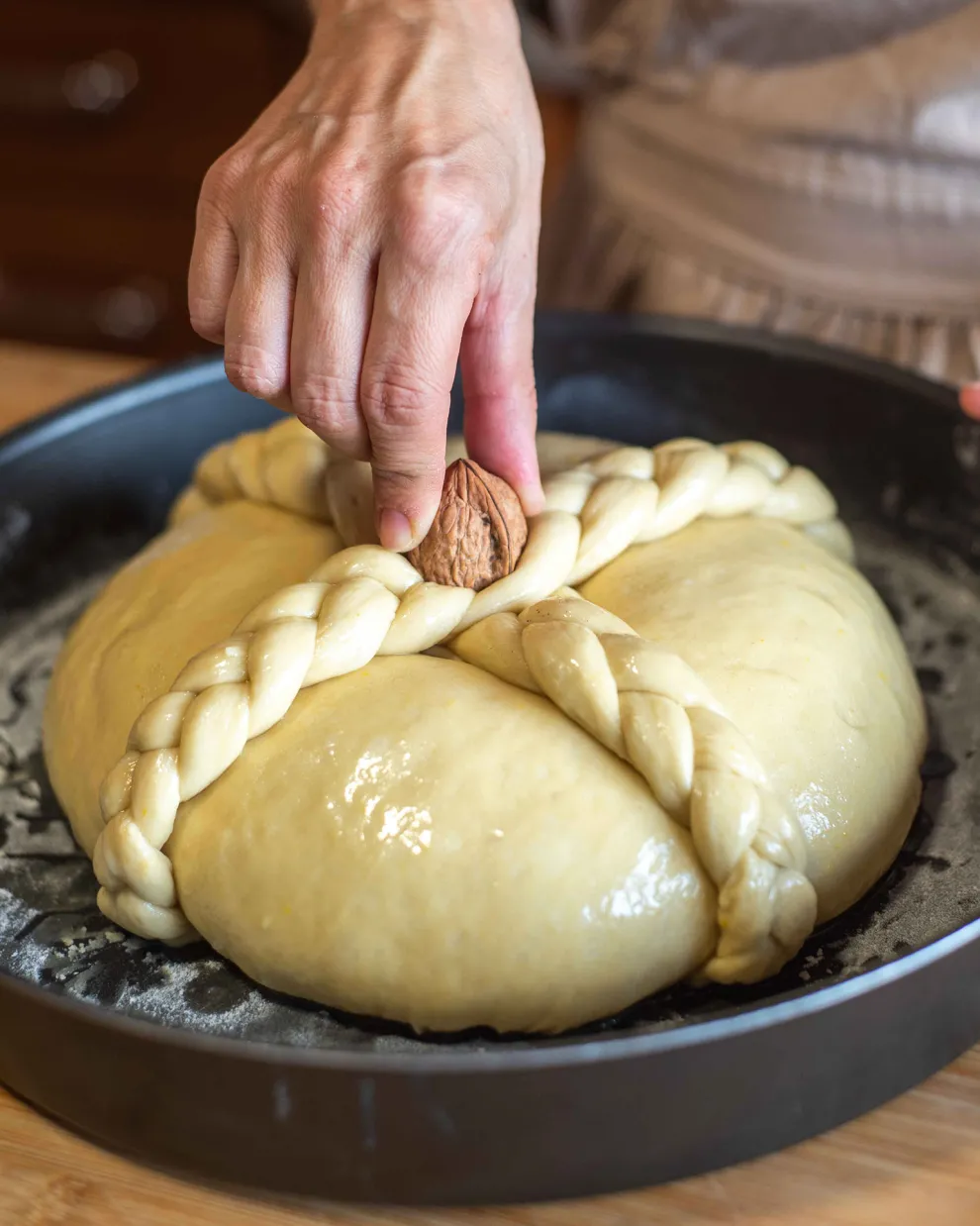
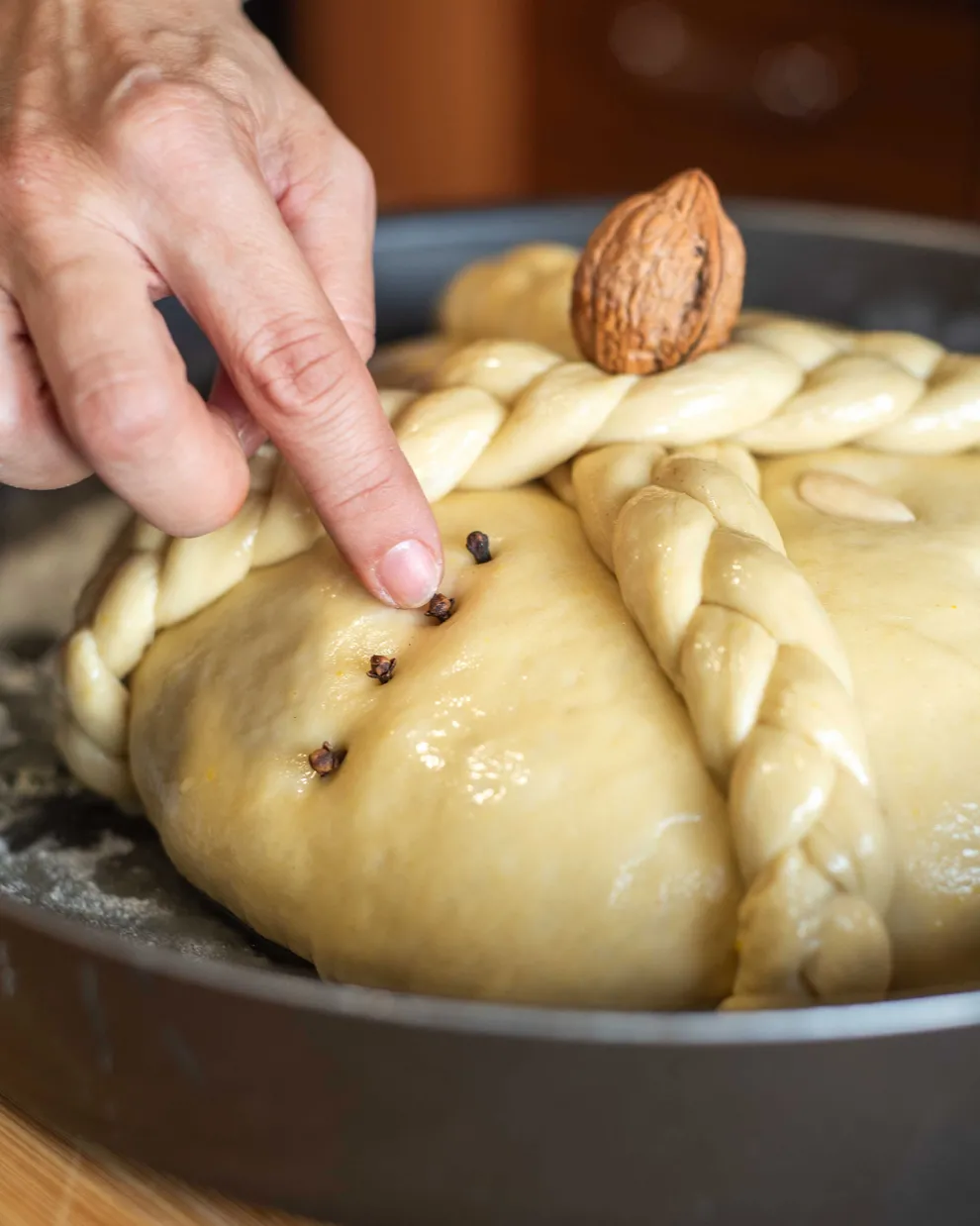
Just like the ingredients themselves, the decoration of the bread carries strong symbolic meaning. If you have the patience and the flair, you can decorate it with intricate patterns, leaves, and figures, though there are also simpler versions with a plain cross in the center and nuts like whole walnuts in their shells, blanched almonds, raisins, whole cloves, etc. When using nuts, gently press them into the dough so they stay in place during baking.
For proper baking, preheat the oven to 180°C on conventional heat or 160°C FAN, so the outside doesn’t burn before the inside cooks through. Because the bread is brushed with sugar water, the crust will darken quickly. If the surface starts to brown too much, cover it loosely with parchment paper and foil. Once it’s baked, brush the top with a little more sugar water for a glossy finish.
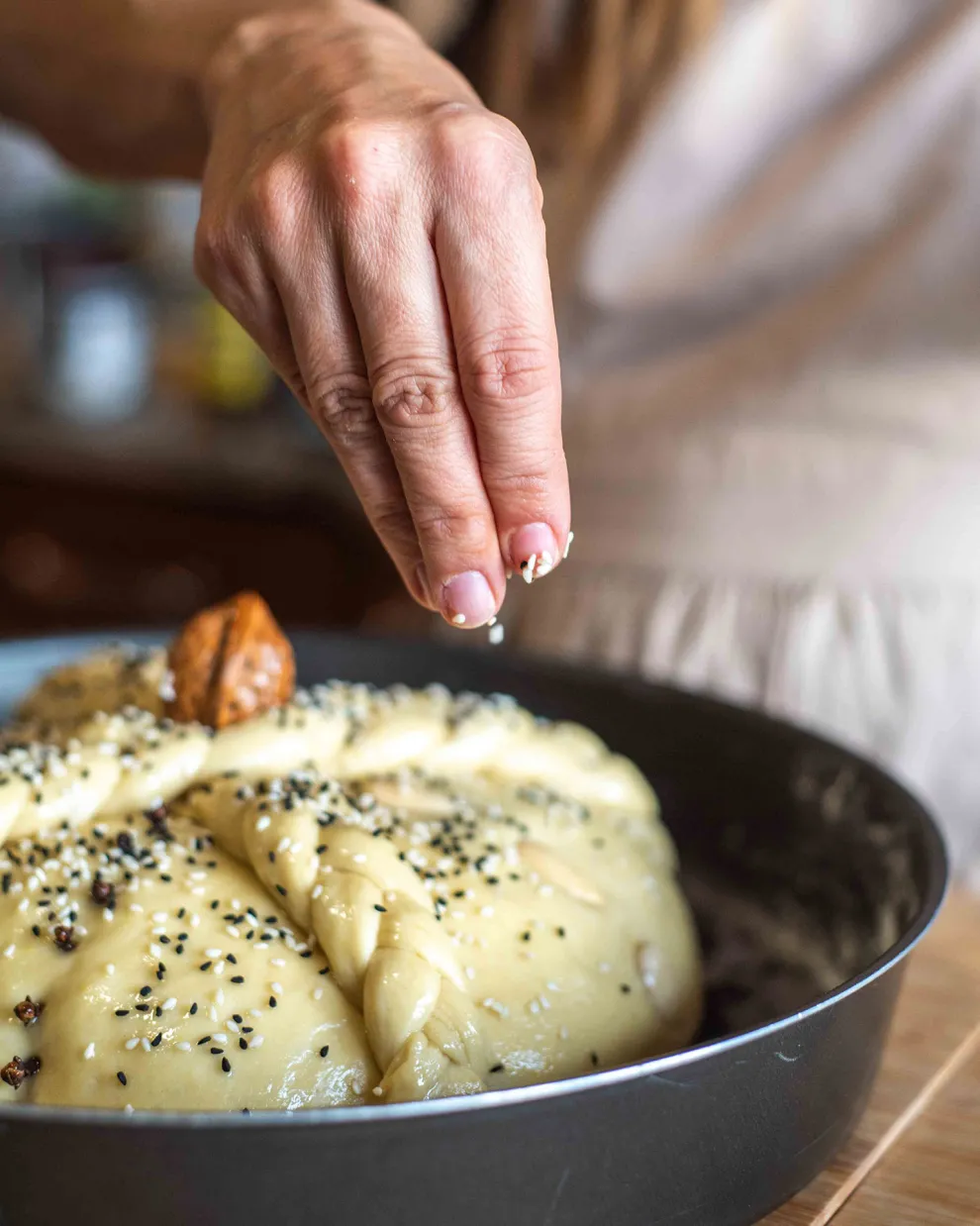
With this same recipe, you can make one large, impressive Christopsomo or two smaller ones. If you choose to make two, adjust the baking time accordingly. Either way, the process is truly enjoyable and the bread turns out wonderfully tasty and fluffy.
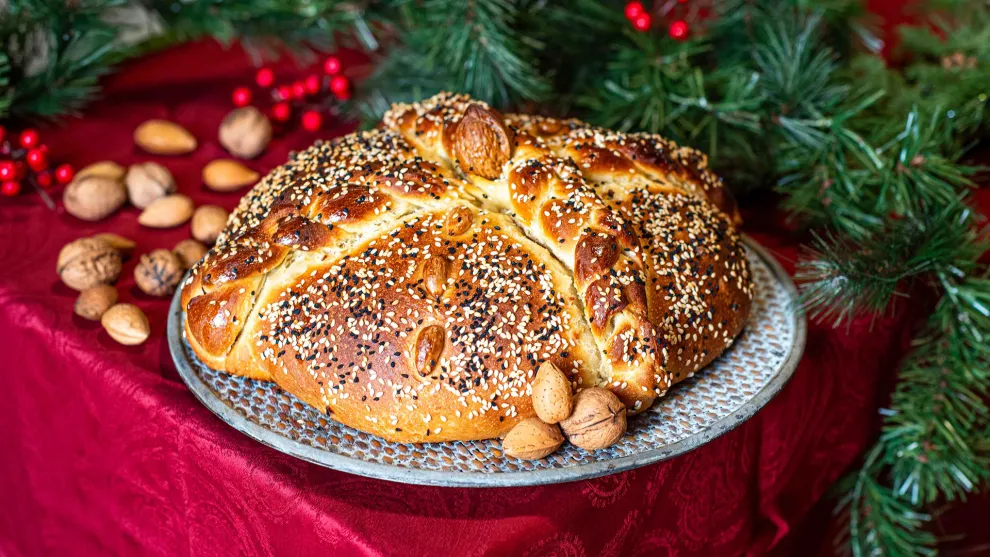
Christopsomo with spices
Prep time: 30 mins | Cooking time: 50 mins | Total time: 1 hour 20 mins | Waiting time: 15 hours
Ingredients
for 1 large loaf or 2 smaller ones
For the starter (sourdough):
- 50 g fresh yeast
- 250 ml lukewarm water
- 250 g hard wheat flour
For the dough:
- 470 g hard wheat flour + extra for shaping and the baking tray
- 280 g tsoureki flour
- 120 ml olive oil + extra for shaping and for the baking tray
- ½ tsp fine salt
- 20 ml orange juice
- zest of 1 small orange (unwaxed)
- zest of 1 small lemon (unwaxed)
- ½ tsp ground mastic
- ½ tsp ground mahleb
- 1 cinnamon stick
- 1 tsp anise seeds
- 6 whole cloves
- 500 ml water
- 180 g sugar
- 60 ml cognac
For sugar water (to brush the bread):
- 2 tbsp hot water
- 1 tbsp sugar or honey
Decorations:
- whole walnuts in shell
- whole almonds, peeled
- whole cloves
- white and black sesame seeds
Method
Preparing the sourdough (starter)
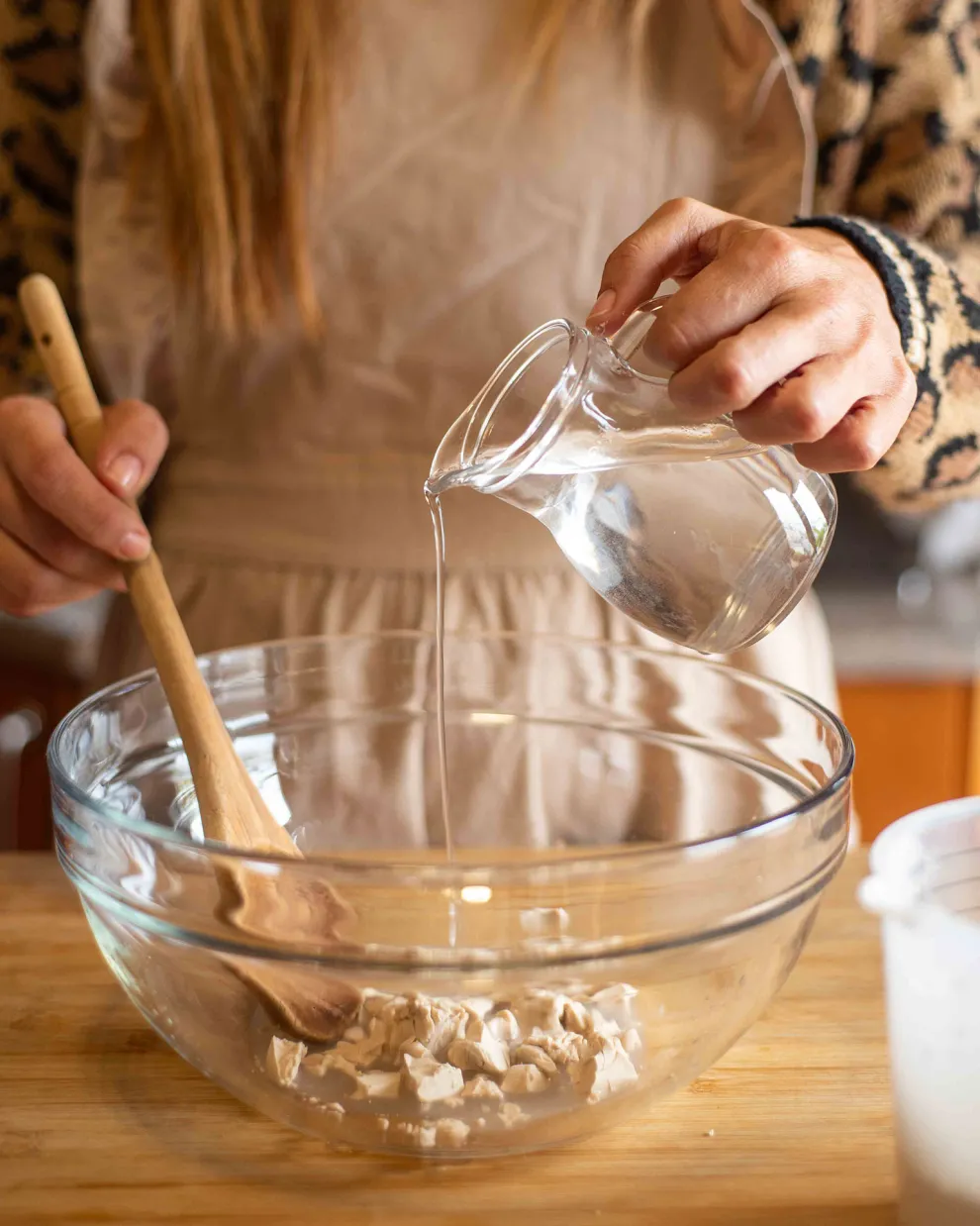
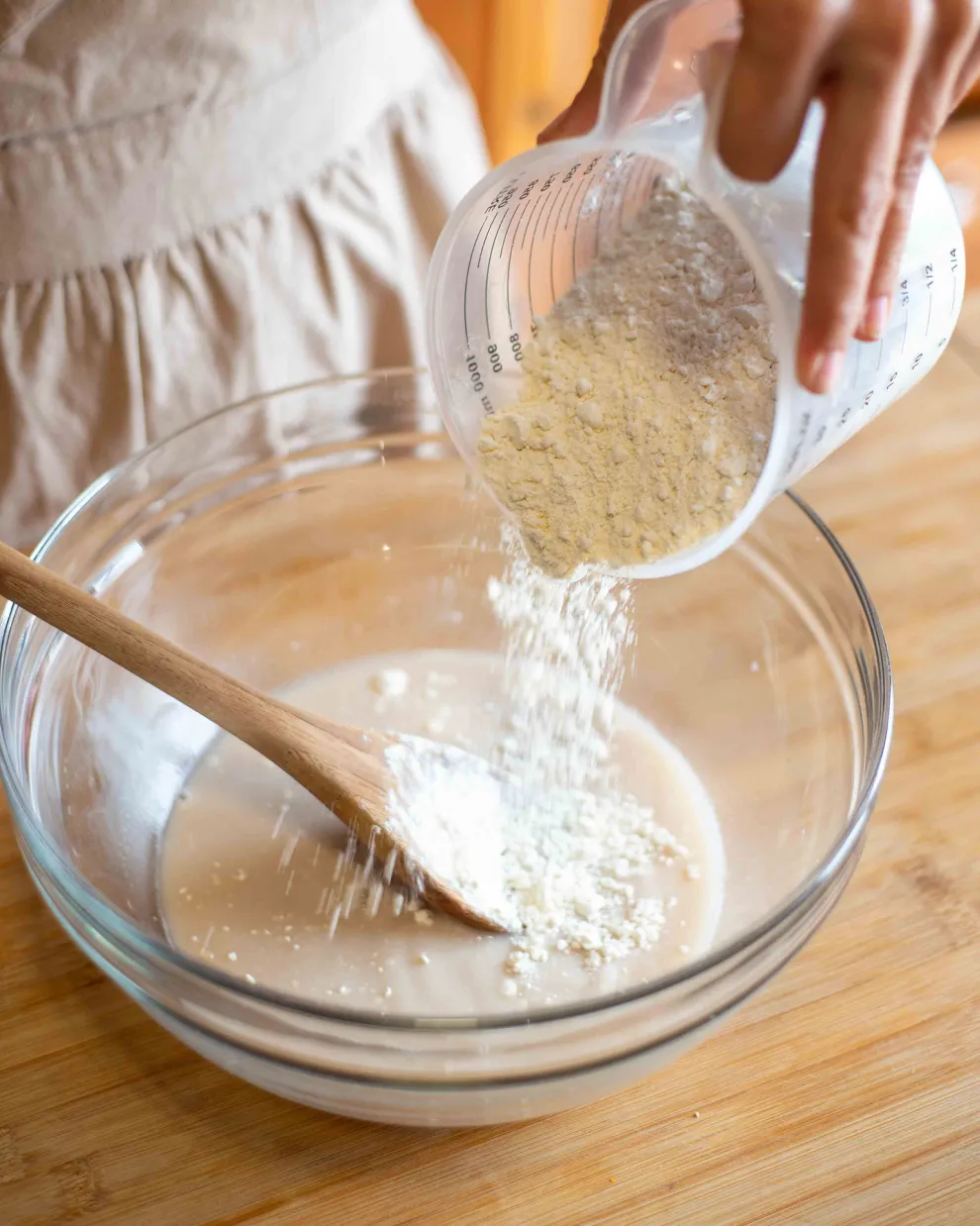
- In a bowl, combine the yeast, lukewarm water, and flour.
- Cover and leave in a warm spot overnight (outside the fridge) to activate.
Preparing the dough
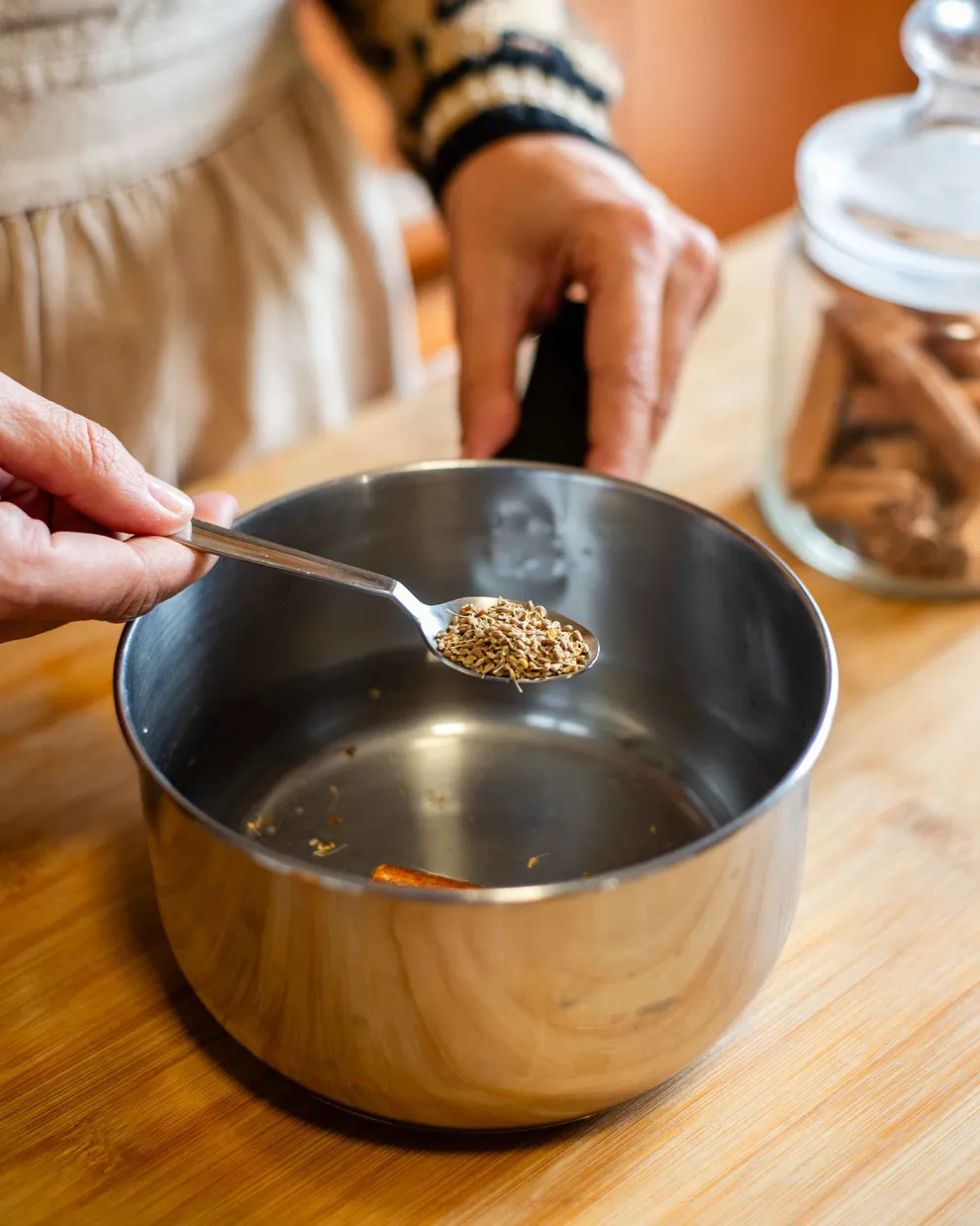
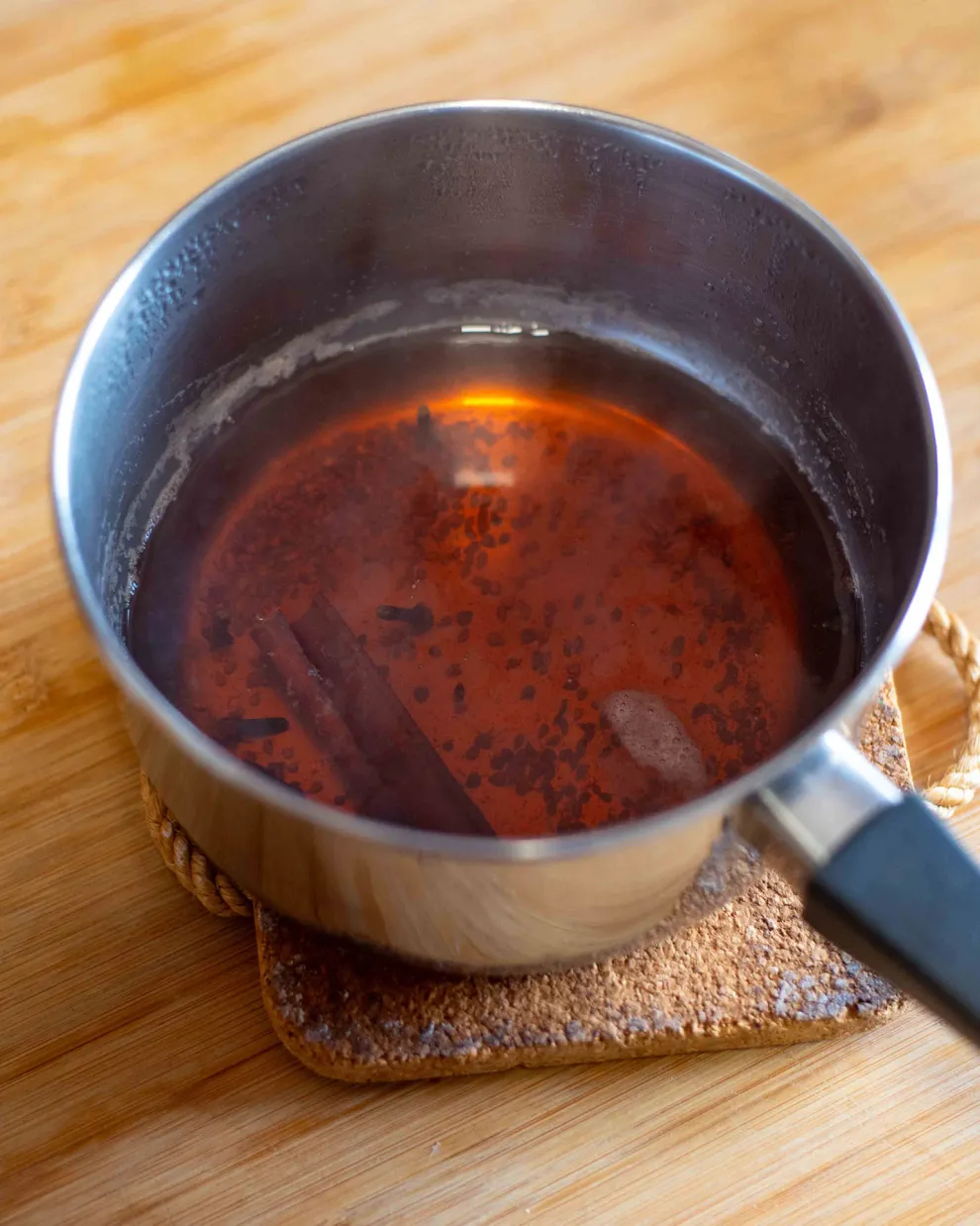
- In a saucepan, combine the water, anise seeds, cinnamon stick, and cloves. Heat over medium heat and simmer for ~10 minutes until reduced by half. Let cool completely, then strain, reserving the spiced water.
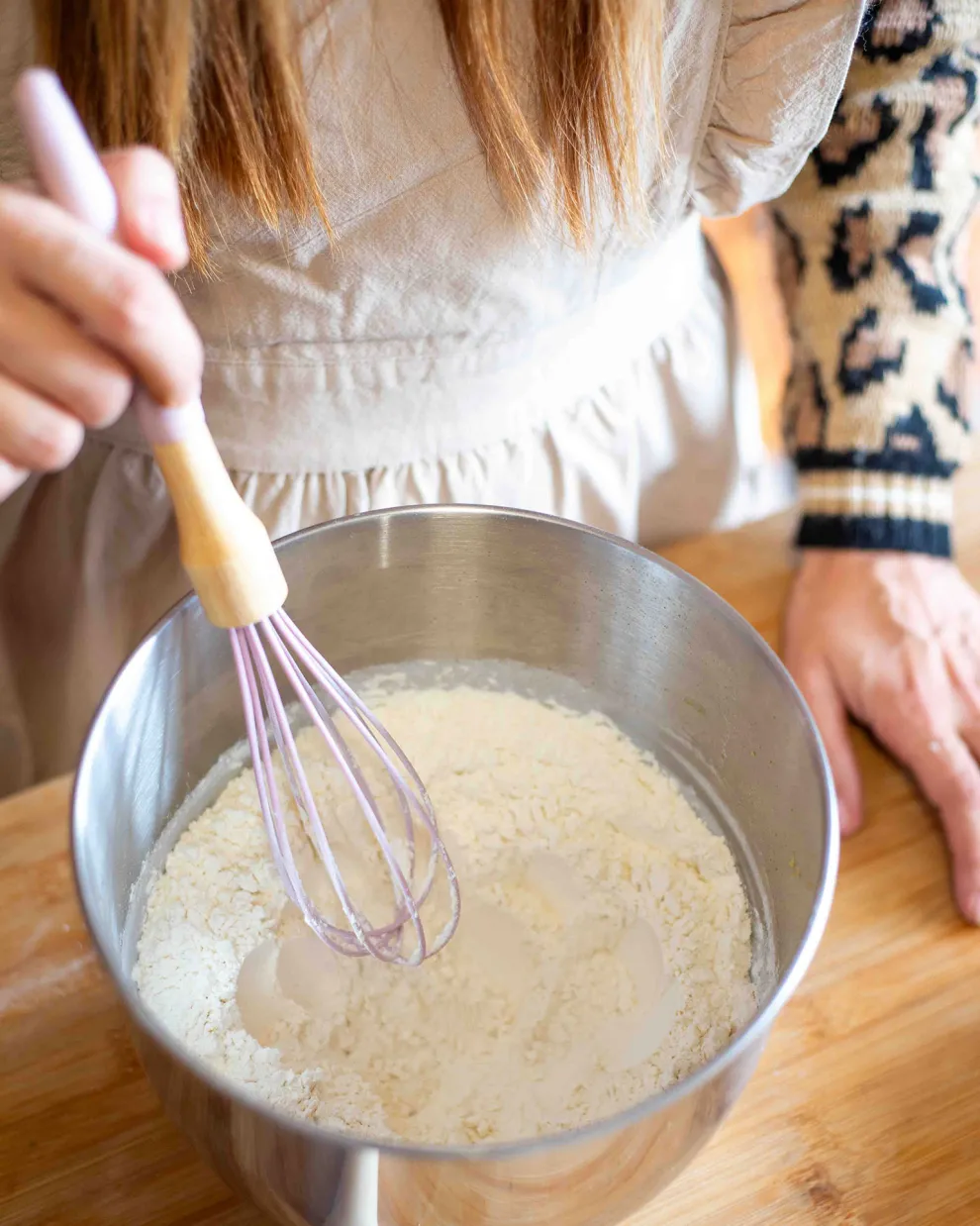
- In a large bowl, sift and mix the two flours.
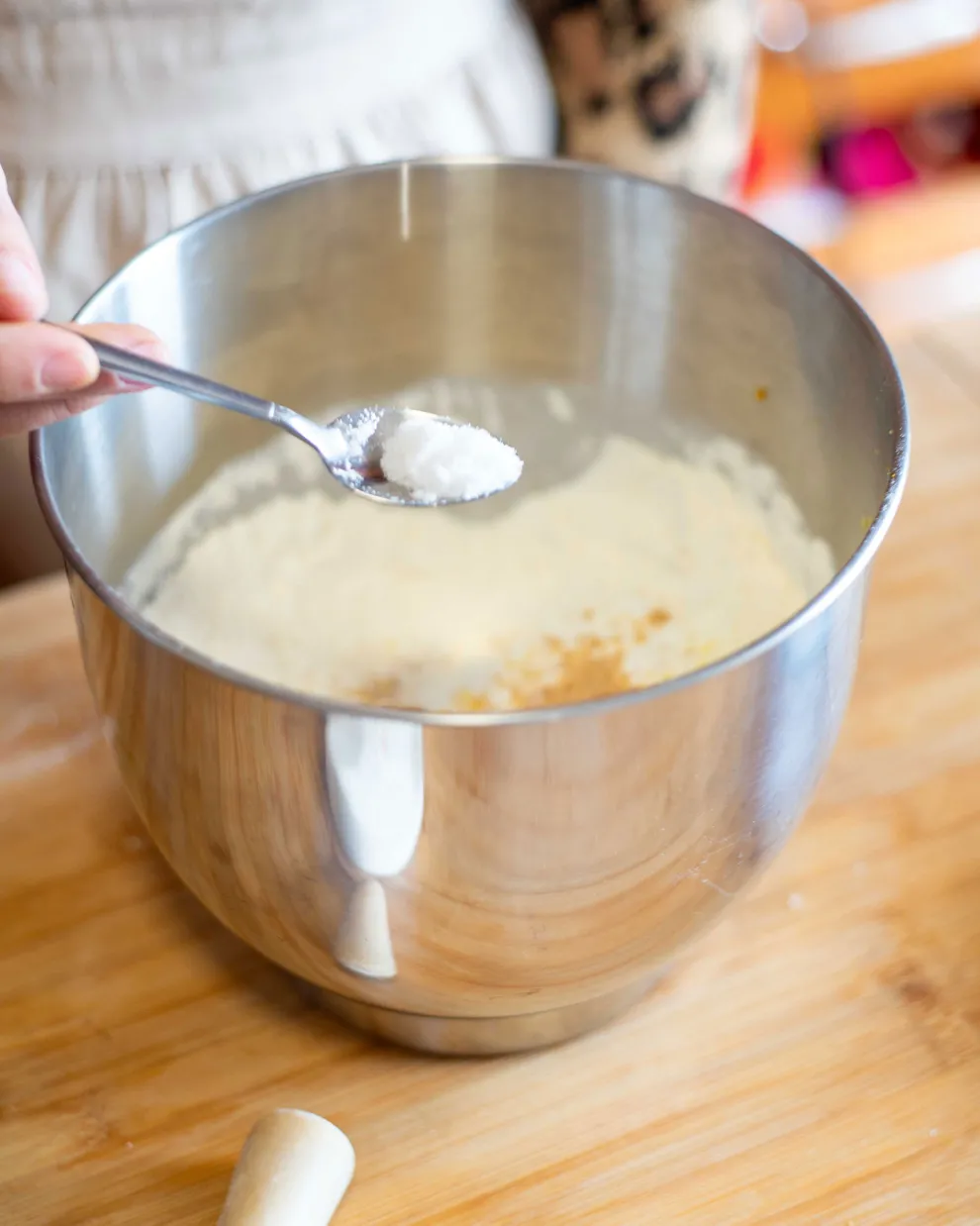
- Add 2/3 of the flour mixture to the mixer bowl. Mix in the citrus zests, salt, mastic, and mahleb.
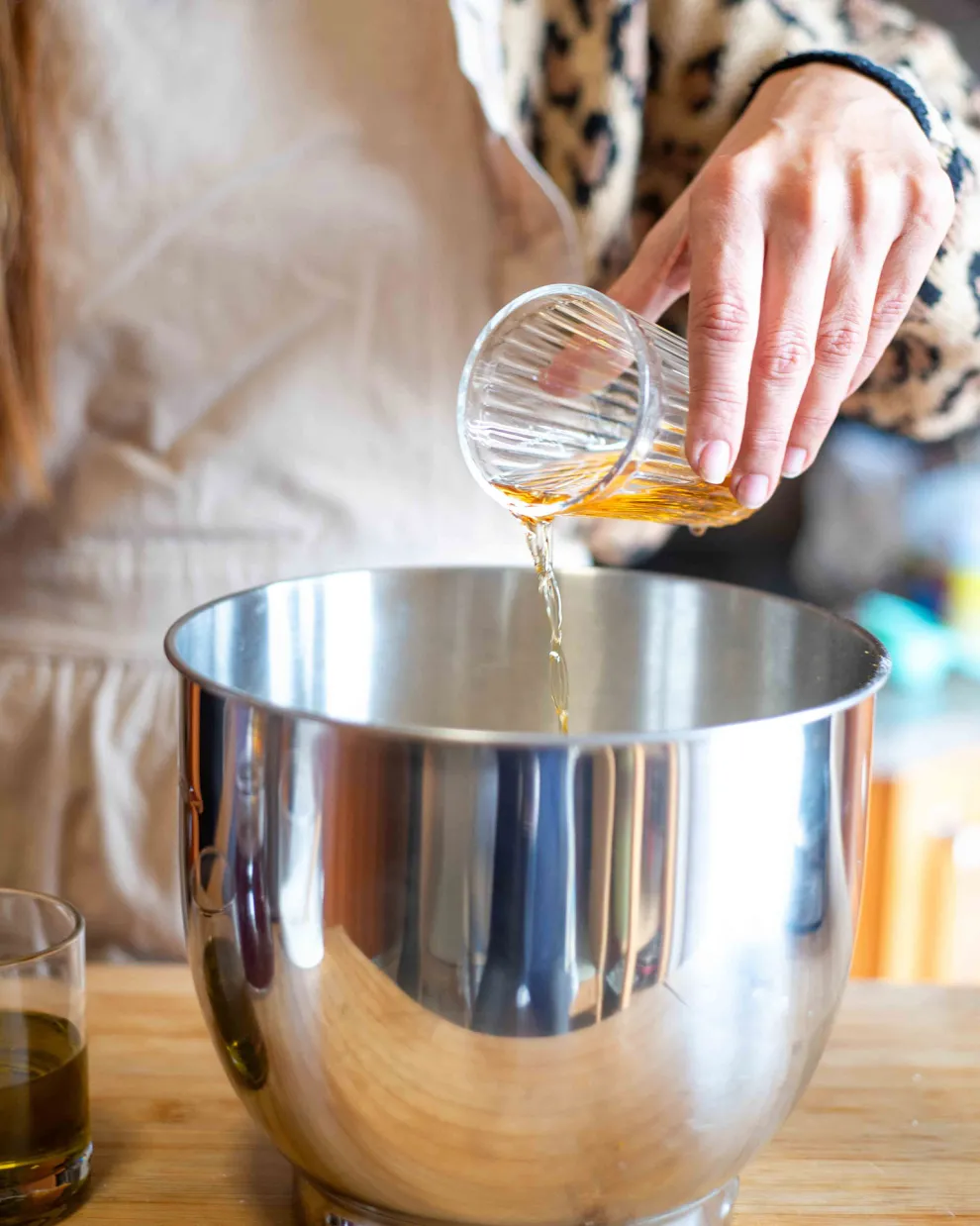
- Make a well in the center and add the sourdough, orange juice, sugar, olive oil, and cognac.
- Mix on low speed, gradually adding about 130 ml of the spiced water and the remaining flour, until all the flour is incorporated. The exact amount of water may vary depending on the weather and humidity.
- Knead for ~5 minutes in the mixer (or ~8 minutes by hand) until the dough is smooth, elastic, and not sticky.
- Transfer to a floured surface and knead for 2 minutes by hand. Add minimal flour only if necessary.
First rise
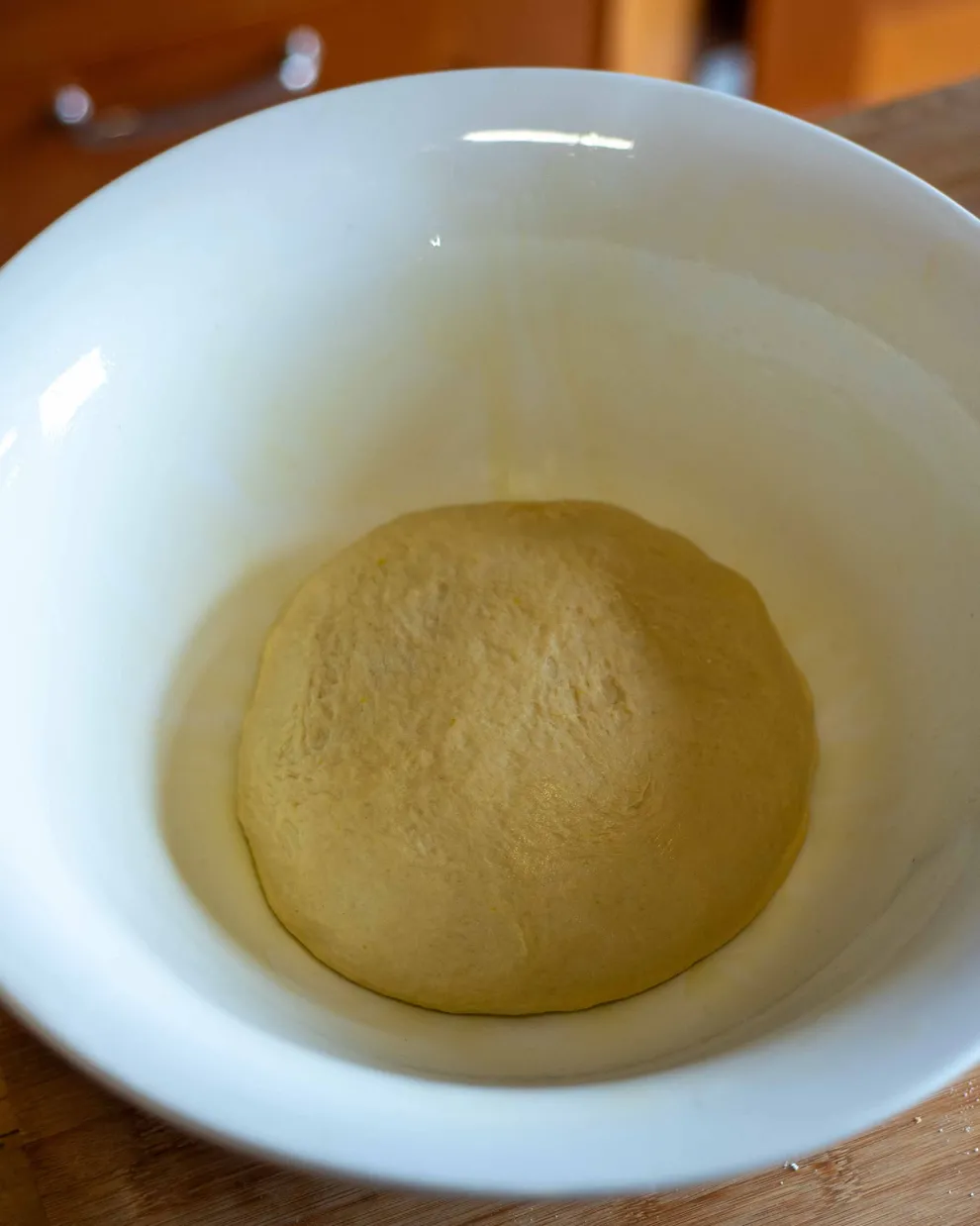
- Grease a large bowl and your hands with oil. Shape the dough into a ball and place it in the bowl.
- Cover with plastic wrap and a towel or blanket. Let rise in a warm place for ~2 hours until doubled in size.
Shaping and decorating
- Grease and flour a round baking tray (~30 cm / 12 in).
- Reserve ~300 g of dough for decoration.
- Gently shape the main dough into a round loaf and place it in the tray. Cover and let rise for another 30–40 minutes.
- Preheat the oven to 180°C (conventional) or 160°C (fan).
- Prepare sugar water by dissolving sugar or honey in hot water.
- Use the reserved dough to shape decorations: crosses, flowers, leaves, braids, animals, etc., and place them on the loaf. Optionally, carve patterns with a knife or razor.
- Decorate with walnuts, almonds, and cloves, pressing lightly into the dough and brushing with sugar water to secure.
Baking
- Brush the entire surface of the loaf with sugar water and sprinkle with sesame seeds.
- Bake on the middle rack for ~50 minutes, checking at 25 minutes. If the crust darkens too much, cover loosely with parchment and foil.
- Once baked, remove from the oven and brush again with sugar water for shine.
- Cool on a rack for ~1 hour before slicing.