From landmarks tied to some of the most glorious chapters of Greek history to elegant mansions, cobbled alleyways, old windmills, scenic walking trails and memorable local flavors, Hydra is the kind of nearby destination that effortlessly captivates you.
Translation | Amaryllis Tsegou
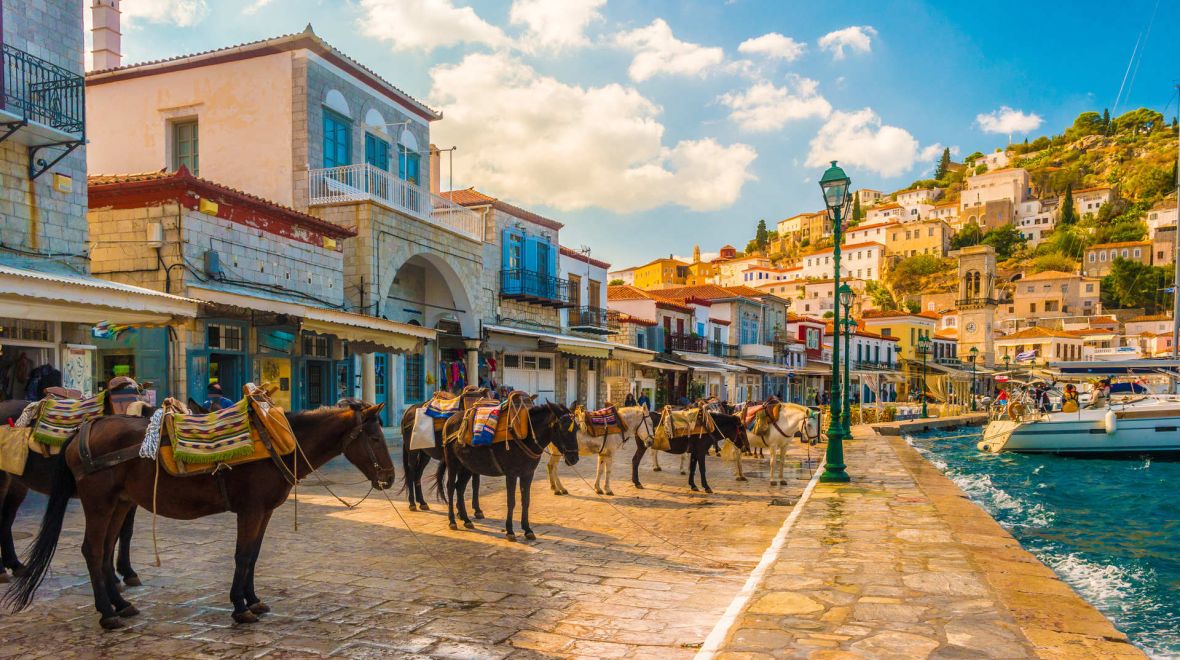
Just an hour from Athens, the car-free island feels like a form of teleportation: one moment you are trapped in the chaos of major avenues, the next you are wandering through an aristocratic world of captains’ mansions, neoclassical buildings and narrow stone streets climbing amphitheatrically above the harbor. Everything unfolds against a backdrop of sea and bare rocky hillsides.
On this island of seamanship, life moves at the pace of another century. The silence is broken only by the bells of horse-drawn carriages, the sound of hooves on cobblestones, the creaking wheels of wooden luggage carts and the voices of passersby.
Hydra is undeniably romantic. Even if you arrive alone, the island quickly puts you at ease- a slower, gentler way of living intertwined with the memory of its heroic past. During the 18th century, Hydra amassed great wealth through its merchant fleet and later contributed enormously to the Greek War of Independence, offering 120 ships, 5,400 men and 2,400 cannons to the struggle. It was also the homeland of important naval figures such as Miaoulis, Pipinos, Sachtouris, Voulgaris, Kriezis and Tsamados.
When steamships replaced sailing vessels, decline followed. Hydra’s prosperity faded and many islanders were forced to emigrate to survive. Then, in the 1950s, Hydra experienced a revival. The film "Boy on a Dolphin", shot here, introduced Hydra’s beauty to the world. Wealthy visitors such as Onassis, Soraya and Jackie Kennedy arrived, while artists including Melina Mercouri, Jules Dassin, Leonard Cohen, Peter Ustinov and the Rolling Stones helped usher in a new era of tourism. At the same time, poets, writers, painters and intellectuals such as Seferis, Tetsis and Hadjikyriakos Ghikas fell deeply in love with the island. Today, the imposing Tombazis mansion - home to the School of Fine Arts - still overlooks the harbour.
Hydra remains a hub of artistic energy, understated elegance and a cosmopolitan European aura that has remained remarkably unchanged through time.
What not to miss
The town of Hydra itself is the island’s beating heart, and wandering through it will likely take up most of your excursion - happily so. From Petalo to the statue of Admiral Miaoulis, every stroll through the narrow alleys reveals another beautiful corner, another elegant stone mansion, another hidden courtyard.
Your walk will eventually bring you to the Monastery of the Dormition, the island’s cathedral dating back to the 17th century, the Castle-Town Hall with its Byzantine Museum, the mansion of Pavlos Kountouriotis, the Tsamados-Sachinis mansion, the Merchant Marine Academy, the impressive Historical Archive-Museum and the twin Venetian buildings.
Periptero, where massive cannons still face the open sea, is where you’ll snap your best shots. In Pavlos Kountouriotis Square you can feel the pulse of daily island life, while at Spilia - with its bars perched above the rocks - you can enjoy some of the most urban swims in Greece whenever the weather allows.
Hydra’s architecture is unmistakable, defined by colorful doors and windows outlined in white. The grand mansions, with their painted wooden ceilings and soaring reception halls, reflect the European influences of the 18th and early 19th centuries, when the island flourished economically. Visiting the homes of families such as the Kountouriotis, Sachinis, Tsamados, Kriezis, Voulgaris and Boudouris clans transports you straight into Hydra’s aristocratic golden age.
Even the Rafalias pharmacy feels like a historical attraction. Nothing inside has changed since 1890 - not the shelves, not the tiny bottles, not even the old “doctors’ room”. A bonus: the family still produces natural cosmetics using traditional recipes.
The Old Wells of 1802 once supplied the town’s water. Today, the square shaded by mulberry trees is worth visiting in its own right, especially because the route there takes you through some of Hydra’s prettiest neighborhoods, including Votsis Square, the Square of the Five Prime Ministers and the little church of the Transfiguration.
High above the harbor sits Kiafa, the island’s oldest neighborhood, dating back to the 15th century. Enclosed by tall stone walls, it charms visitors with colorful houses, vaulted passageways and cobbled lanes known locally as diavatika. Around sunset, a walk through picturesque Kamini - originally built by migrant potters from Sifnos - is especially magical, as is the pine-lined path leading to the Red House, once home to Admiral Miaoulis.
For the island’s most breathtaking panoramic view, follow the one-hour, beautiful, uphill route to the Monastery of Prophet Elias, founded in 1813. According to local tradition, Kolokotronis and other revolutionary leaders were once imprisoned here during the War of Independence. Other beautiful walking routes include Vlychos, Mandraki and Kamini, all offering unforgettable views over the island.
The flavors of Hydra
Hydra produces almost nothing besides tourism and culture. Most supplies arrive from Piraeus and Argolis. The island’s fishermen, however, still preserve a connection to the primary sector and Hydra remains famous for its squid, cuttlefish, octopus and especially its red mullet, with flavor shaped by the rocky seabed surrounding the island.
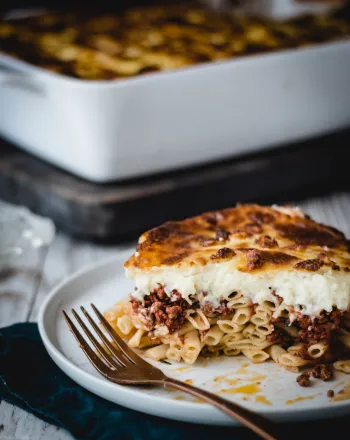
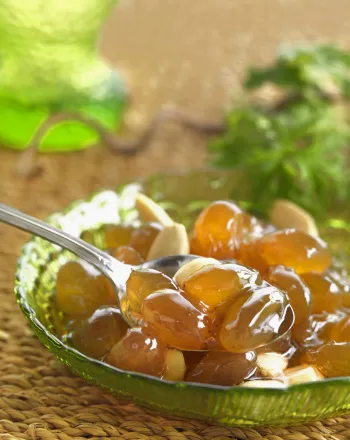
Traditional recipes also survive. Handmade gogles - shell-shaped pasta served with butter - are still prepared, alongside the island’s famous almond sweets, homemade pancakes known as kiourlies drizzled with honey or grape molasses, fasting skaltsounia, kourabiedes and sugar baklava.
Among the island’s classic dishes are snails cooked in tomato sauce or stifado, wild greens pie, squid and cuttlefish pilaf cooked in their ink, savoro red mullet and garfish, festive veal with quinces and kapamas. Hydra is also perhaps the only Greek island where lamb is traditionally roasted on a spit at Easter, following Peloponnesian custom, while most islands prefer oven-roasted lamb.
The best tables on the island
On the site of the legendary old Lagoudera, with a veranda overlooking the sea, Omilos (Tel: (+30)22980-53.800) serves everything from breakfast and coffee to a sophisticated menu centred on seafood and pasta. Standout dishes include steamed shellfish with Assyrtiko and chilli, squid carbonara with asparagus and chorizo, and marinated sea bass with sea urchin and Espelette paprika
A local institution since 1994, Caprice (Tel: (+30)22980-52.454) remains one of Hydra’s most classic dining spots. Housed in what was once the owner’s grandfather’s sponge warehouse, it is famous for its thin-crust homemade pizza and its creative seafood pasta dishes, prepared with fresh local catch, such as linguine with sea urchin and cuttlefish risotto.
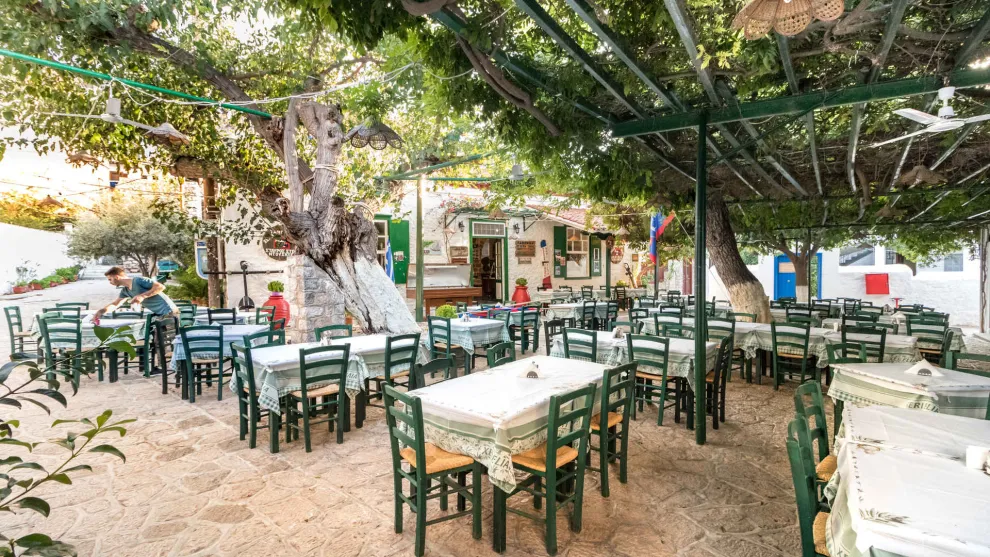
Hidden down a narrow alleyway, Kryfo Limani (Tel: (+30)22980-52.585) welcomes guests into a dreamy courtyard shaded by lemon trees and vines. It is an authentic taverna, ideal for fresh local fish, slow-cooked veal in tomato sauce with proper potatoes, dolmadakia, oregano octopus, fava and zucchini fritters.
Known also as Douskos’ tavern, Xeri Elia (Tel: (+30)22980-52.886) is one of Hydra’s oldest and most storied tavernas, with nearly 180 years of history. Leonard Cohen even wrote a song inspired by it. Beneath the shade of a leafy little square that feels lifted from a fairy tale, guests gather for seafood, game dishes in season, shrimp pasta, hand-cut fried potatoes and often spontaneous evenings of music and dancing.
On the harborfront, overlooking the yachts, nostalgic and gorgeous Oraia Hydra (Tel: (+30)22980-53.847) carries on the legacy of the historic Psaropoula restaurant with creative seafood cooking: red mullet savoro with vegetable briam, fish croquettes with skordalia mousse, shellfish baked in parchment with lemon leaves and smoked mussels with saffron.
For meat lovers, Yasemi (Tel: (+30)22980-52.221) has become one of the island’s most beloved casual tavernas. Slightly removed from the bustle near the football field, it is relaxed, welcoming and known for its pancetta, ribs, local steaks, lamb baked in parchment, kontosouvli, ewe cooked in tomato sauce with thick pasta and mizithra, as well as hearty cooked dishes. Owner Giorgos Saitis, whose father worked as a ship’s cook, may well be one of the island’s most gifted cooks.
Kyveleia: a historic pastry shop
In 1930, Aristeidis Tsagkaris opened the island’s first elegant café-pastry shop at the port and introduced Hydra’s almond sweets to the wider market, as until then they had been made only in island homes.
In 1957, his son took over alongside his wife Anna, who perfected the recipe that remains famous to this day. Today, the business is run by the third generation of the family, with grandson Dimitris carrying on the famous recipe, made with the simplest ingredients: rose water, almonds, semolina and sugar, while also creating the first ice cream flavored with Hydra almond sweets.
Made from just almonds, semolina, sugar and rose water, the almond sweets are shaped like tiny pears, baked in the oven and dusted with powdered sugar. Symbolizing fertility, they remain an essential treat at Hydra weddings (Tel: (+30)22980-52.314).
Unique activities
Hydra is, above all, an island for walking. Its compact size and network of well-marked paths make it ideal for hikes ranging from short 30-minute strolls to routes lasting over six hours, all showcasing some of the island's most beautiful landscapes. For those wanting organized walking experiences, hydrawalkingtours.com offers guided routes, though exploring independently is equally rewarding thanks to the island’s excellent trail network of the 5 most significant routes.
If you prefer discovering Hydra from the water - or even fishing in its surrounding seas - hydrabyboat.com organizes excursions and boat experiences.
Miaouleia and the Sailing Race of the Greek Revolution
Hydra’s biggest annual celebration, Miaouleia, begins every year on the weekend closest to June 21 and lasts for two weeks. Far more than a typical summer festival, it is a deeply emotional celebration of history, identity and collective memory.
The programme includes historical reenactments, lectures, concerts, dance and theatre performances, culminating in the dramatic burning of an Ottoman flagship in the harbour - a spectacular tribute to Hydra’s naval contribution during the Greek War of Independence.
Every March 25, the island also hosts the Sailing Race of the Greek Revolution, an event that has been taking place in Hydra since 1973!