For many, Easter simply isn’t Easter without lamb roasting on the spit - especially for those lucky enough to set it up outdoors, gather early and enjoy the day as it should be. But what does it take to get that perfect lamb or goat on the spit?
Translation | Amaryllis Tsegou
First of all, choose a good-quality lamb or goat - preferably Greek - around 12 kg. Also, it is essential for preparations to begin the day before, following these steps:
Preparation (Holy Saturday)
Ideally, start preparing from midday or early afternoon on Holy Saturday:
- Place the lamb on a work surface and clean off any remaining hairs or impurities. Clean the spit thoroughly as well. Do not remove or disturb the caul fat—it’s what gives the lamb much of its flavour.
- Begin threading the lamb onto the spit, keeping it straight and properly aligned, all the way through to the head.
- Secure it firmly with the back clamps and tighten well.
- Tie the legs crosswise and secure the neck, using strong (preferably galvanised) wire.
- In a bowl, mix 2–3 tbsp black pepper with plenty of salt.
- Season the lamb thoroughly, inside and out—especially inside the cavity.
- Using a sharp knife, make 2–3 small incisions in the legs and rub in additional salt and pepper.
- Sew the belly closed using kitchen string and a large needle.
- Stand the spit upright in the coolest part of the house, placing a tray underneath to catch any drips. Keep it in a spot where it won’t be disturbed (by pets, temperature changes, etc.) and cover it completely with a clean, ironed cotton cloth or sheet, making sure the head is also covered. Wrapped this way, it will also be easier to transport in the morning.
Roasting (Easter Sunday)
- On Easter morning, prepare the fire pit using charcoal and vine branches, which add a distinctive flavour.
- Once the fire has settled and the embers are ready, bring out the lamb and remove the cloth.
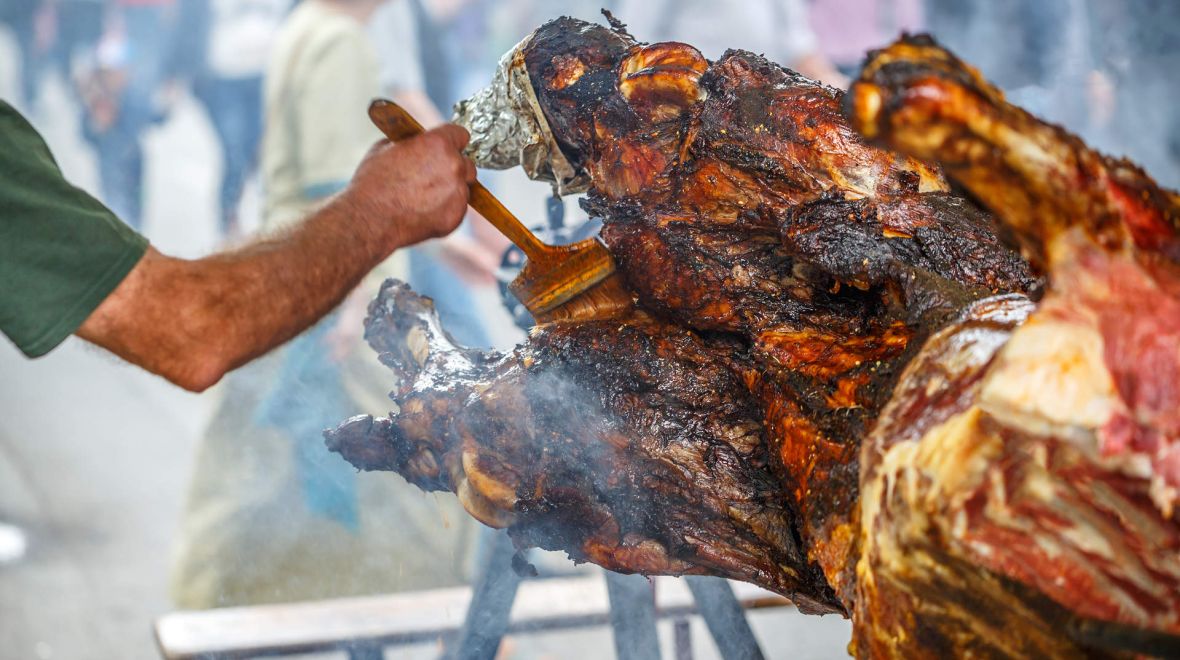
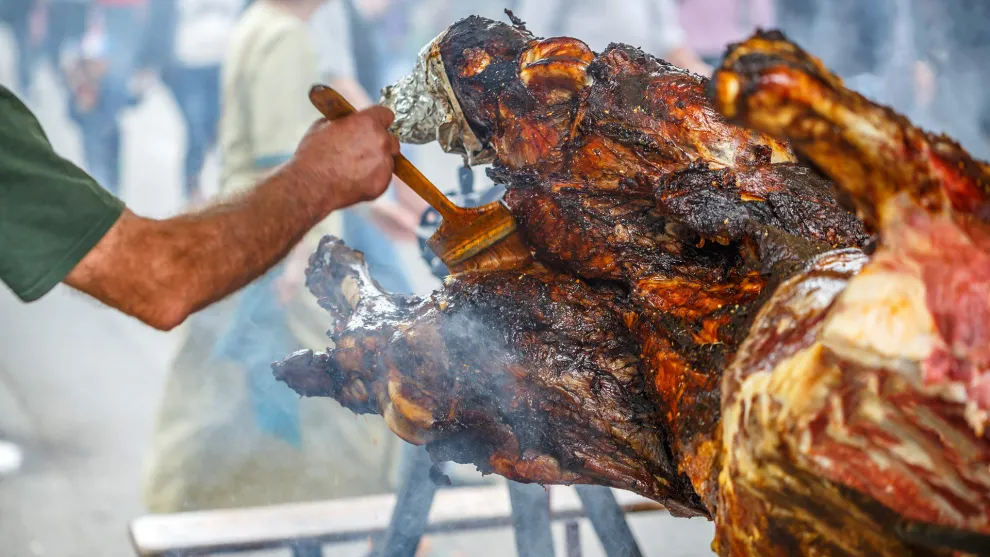
- Start roasting slowly by positioning the spit high above the heat. Turn it steadily and continuously for 4–5 hours, depending on how well done you prefer it.
- As it cooks, gradually lower the spit closer to the heat.
- The lamb is usually ready when the back begins to crack and it stops releasing significant juices.
- Let it rest briefly, then carve and serve while hot.