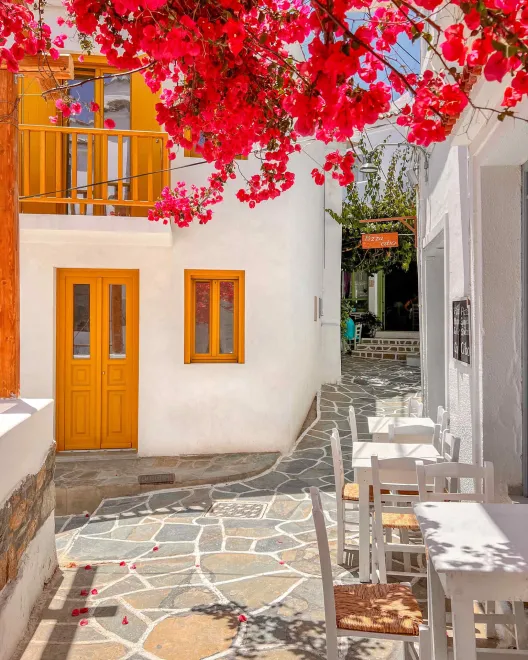
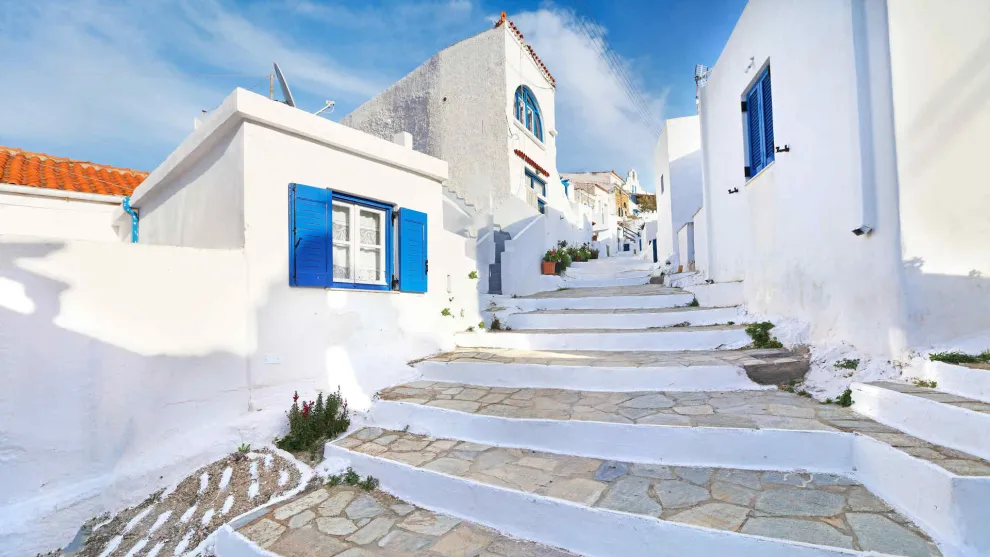
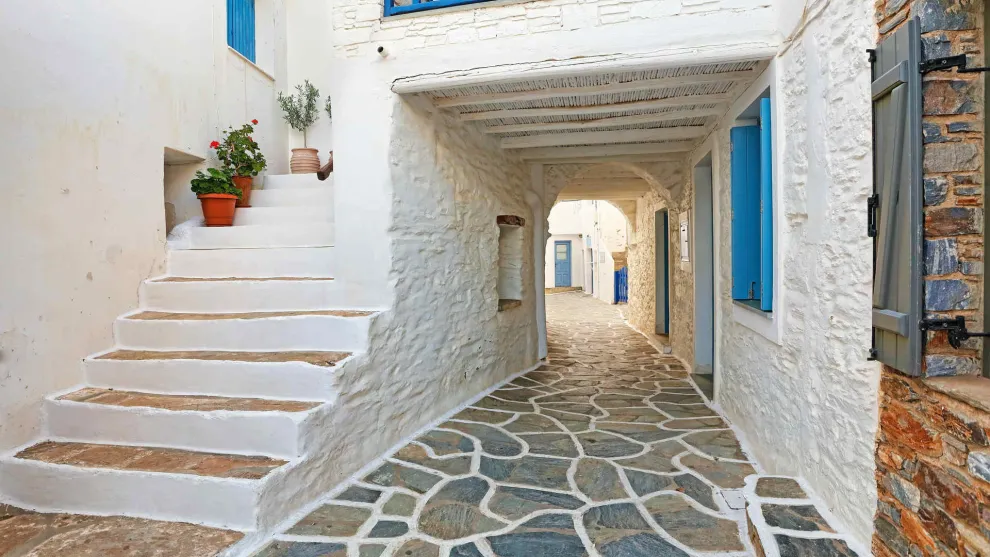
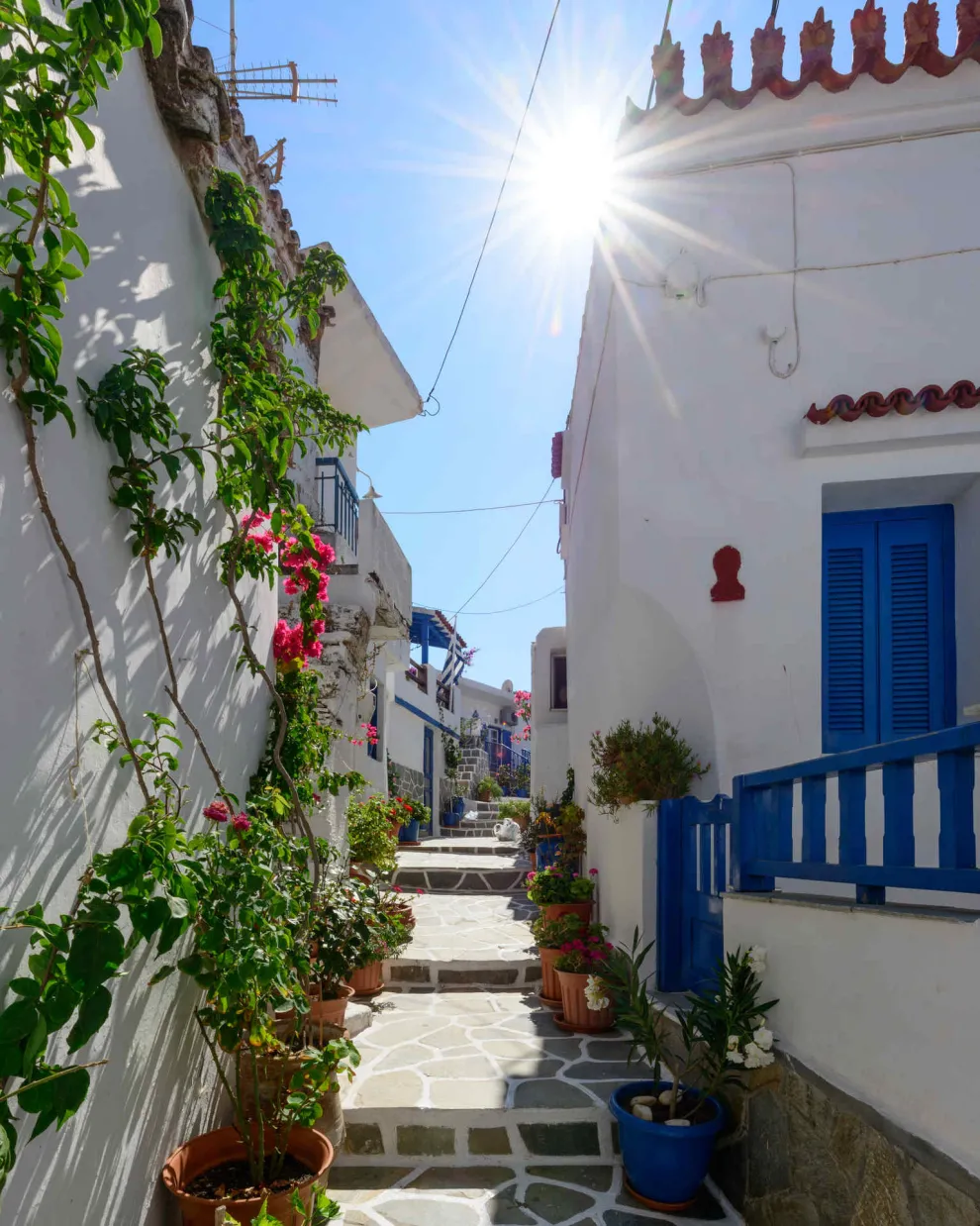
Just an hour and a half from Lavrio - one of Attica’s three main ports - lies a Cycladic island that feels like a glimpse of what Mykonos might once have been before modern overdevelopment. Kythnos is uniquely authentic: an island of pure Cycladic landscapes, ancient ruins open to visitors, picturesque villages with painted alleyways, whitewashed paving stones, flowers and aromatic herbs growing everywhere.
Translation | Amaryllis Tsegou
What will likely impress you most are the dry-stone walls, masterpieces of craftsmanship unlike anywhere else in the Cyclades. Stretching across slopes and gardens from one end of the island to the other, they form an intricate embroidery of stone woven into the landscape itself. The island’s gentle, human-scale terrain is combined with its extraordinary variety of beaches - more than any other Greek island. There are cosmopolitan beaches, sheltered sandy coves, wild rocky shores and secluded stretches where you may find yourself entirely alone.
Liveliness and calm coexist effortlessly here: villages made for slowing down and unwinding, alongside others where the nights stretch on until morning. Kythnos is just small enough for you to discover each of its beauties without effort, yet rich enough to keep surprising you at every turn. It’s the kind of place you fall in love with instantly - and one you’ll almost certainly return to.
Experiences worth having
- Thanks to its mild terrain, Kythnos is ideal for walking, and its network of 13 official hiking trails reveals untouched Cycladic scenery with endless sea views.
- No island experience is complete without time on the water, and from the main port of Merichas, Delta Boats (tel. (+30)698-73.62.280) organizes daily excursions to many of the island’s beautiful beaches and hidden coves.
- Dryopida, with its tiled-roof neoclassical houses, whitewashed alleys and charming little shops, feels like a true Cycladic dollhouse. It is also the gateway to Katafyki Cave, one of the most impressive caves in Greece and a site closely connected to the island’s mining history. Inside lies a dark, imposing world of labyrinthine natural and man-made tunnels, many carved over centuries by the underground stream flowing beneath the village.
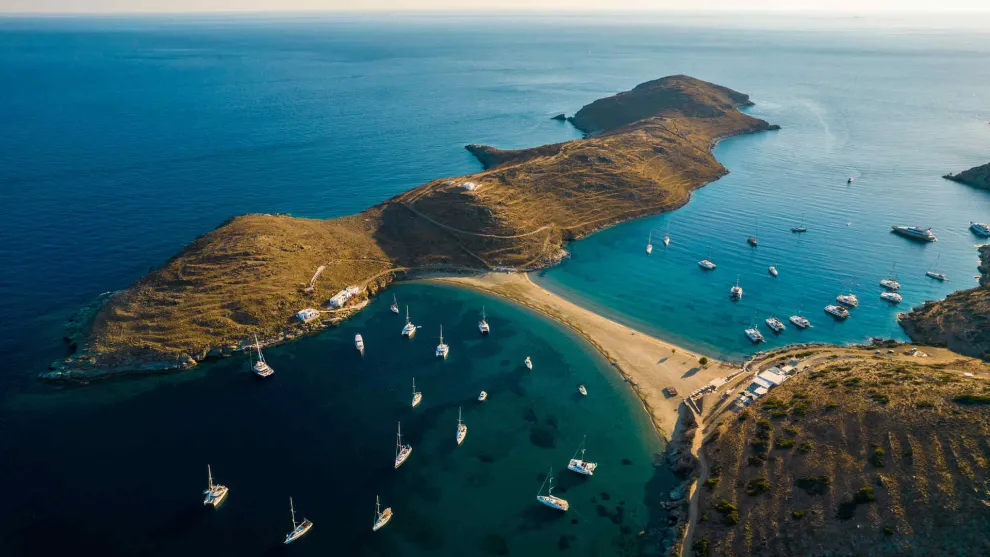
- Kolona, the island’s famous "double-sided" beach, is one of Kythnos’ most photographed landscapes, with its narrow strip of sand connecting two bays. Were it not for the soundtrack of the beach bar, the setting might feel almost unreal. If you prefer not to drive there yourself, sea taxis make the journey easy.
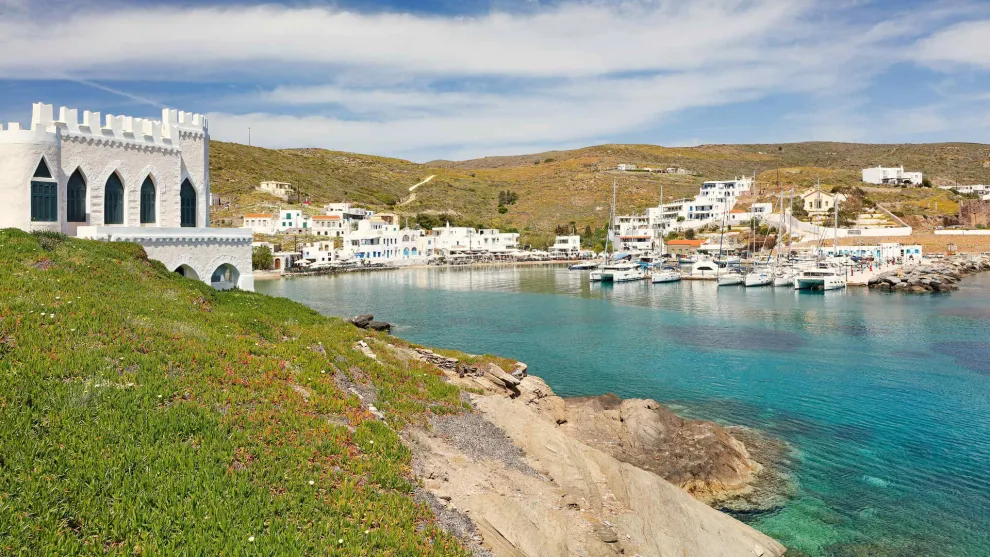
- Another must is Loutra, home to the historic Hydrotherapy Centre designed by Ernst Ziller and beloved by King Otto and Queen Amalia. The village’s two thermal springs - unique among the Aegean islands - have been known since antiquity for their therapeutic properties. One of the island’s most memorable experiences is swimming where the warm thermal waters merge with the sea.
- For history lovers, the Castle of Oria offers dramatic ruins and sweeping views over the open sea. This was once the island’s medieval capital before its destruction by Barbarossa.
- Vryokastro, the island’s ancient capital, preserves the remains of the Sanctuary of Demeter. The archaeological ruins themselves may seem modest, but the location possesses an extraordinary energy-as though, with your gaze alone, you could touch all the poetry of Elytis, Seferis and Ritsos at once. Just below lies Apokrousi beach, with its turquoise waters and shady tamarisk trees.
- Among the island’s many beaches, each has its own personality. Gaidouromantra rewards visitors with crystal-clear waters after a descent down quite a few steps. Agios Sostis offers ideal seabeds for snorkeling, while Potamia and Kavourocheri are perfect for those seeking solitude. Divers tend to favor Mandraki for the submerged remains of the ancient harbor, while organized Episkopi attracts a livelier crowd.
- If Tinos feels too far away for a pilgrimage, Kythnos has its own revered Panagia Kanala, perched on a pine-covered cape. Those who plan ahead may even manage to rent one of the monastery’s traditional guest cells during the August 15 celebrations.
- One of the island’s most breathtaking drives is the route from Dryopida to Agios Dimitrios, running along the ridge of the island with uninterrupted sea views on both sides.
- To understand what life once looked like in a traditional Thermian household, visit the Folklore Museum of Dryopida. The brand-new Archaeological Museum displays finds from Vryokastro as well as artifacts from the Paleolithic period and the years of Kythnos’ mining prosperity.
- At Spitares, meanwhile, the abandoned remnants of the island’s metallurgical industry - which flourished between 1873 and 1940 - stand scattered across a rugged Cycladic landscape. The deserted administration building of the Serpieri company makes for a hauntingly beautiful walk from Dryopida.
The taste of tradition
With livestock farming, agriculture and renowned honey production, Kythnos has long enjoyed a rich food culture. In fact, the Fix brewery once sourced its barley from the island, and production was so abundant that exports were also possible. Its cheeses are especially notable: tyrovoli, local kefalotyri, spicy kopanisti matured inside jars, fresh salty goat cheese, sour cheeses used for pies and sfoungata, and more recently, excellent feta.
The island’s signature cheese, however, is trimma - also known as triftis or zymoto. This spicy, slightly sour, buttery and crumbly cheese traces its roots back to antiquity, when it was known as “Kythnian cheese”. It is made by kneading sour cheese with mizithra before allowing it to mature in jars for anywhere between two weeks and three months.
Kythnos also produces exceptional fruit, especially pears, with numerous local varieties such as the green milapida, buttery beides, round loubardiatika, fouskoules and wild gortzakia.
Local wine
Wine production on Kythnos dates back to antiquity, and the island once cultivated a remarkable range of grape varieties, including sasala, psarosyriko, sideritis, aspradi, potamisi, serfiotiko, tsampatos, roditis and savvatiano.
The visitable Gonidakis winery in Loutra offers an excellent introduction to the island’s viticultural heritage. Visitors can explore the old wine press, learn about the local vineyard tradition and taste wines made from Assyrtiko, Potamisio, Mavrotragano and Psarosyriko grapes.
What to try
- Kythnos has a deep affection for doughs and baked goods. Local specialties include barley ring breads scented with anise, takakia rusks flavored with mastic and anise, and pitaro - bread dough stuffed with trimma cheese.
- There is also poulo, another bread dough preparation filled with cured pork, whose fat enriches the pastry, as well as Easter pitaras with cheese and dill.
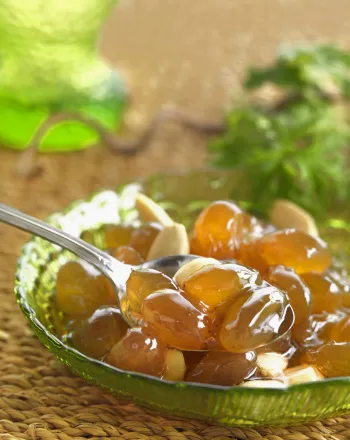
- Other traditional dishes include Melitinia, koukoulopites with fresh spring onions and cinnamon, homemade orzo, pasta and tagliatelle-like zoupes, Thermian greens pie (kolopi), tarahto an egg-based strapatsada, sfoungata - fried cheese croquettes and arguably the island’s most iconic dish, fish savori, potato and caper salad, almond sweets and Thermian pasteli, traditionally associated with weddings and celebrations, aranto, a simple cream made from milk, flour and water, finished with cinnamon and finally local cured pork and sausages.
The best tables in Kythnos
At Koutsikos (tel. (+30)22810-31.185) in Loutra, everything revolves around home-style cooking and ingredients of their own production: tender lemon goat, boiled goat, honeyed imam, chickpea stew, sfoungato, cooked capers and zucchini fritters.
Facing the sea at Kanala, Archipelagos (tel. (+30)22810-32.380) combines produce from its own vegetable garden with deeply traditional cooking. Expect local meats, tomato fritters, sfoungata, lamb casserole, chickpea stew rabbit in tomato sauce and rooster braised in wine.
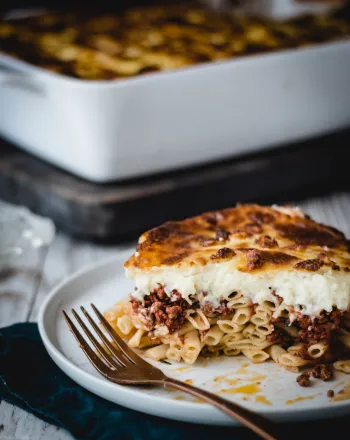
In Dryopida, Pelegra (tel. (+30)282-10.32.322) serves some of the island’s most comforting cuisine, with local products at the centre of every dish: Thermian, buttery trimma, baked pastitsio, slow-roasted goat with potatoes and airy, perfectly light sfoungata.
For properly grilled fresh fish, locals point visitors toward Ostria (tel. (+30)228-10.33.017) in Merichas and its owner, Mr. Manolis.
Aria (tel. (+30)228-10.31.371), an old family-run fish taverna in Agia Eirini, is especially known for its fish soup, lobster pasta, cuttlefish cooked in its ink and charcoal-grilled squid.
Right beside the sea and shaded by tamarisk trees on Agios Dimitrios beach is Milas (tel. (+30)694-58.25.813), one of the island’s finest tavernas. Its standout dishes include local strapatsada (cell food), wonderfully crisp sfoungata, Thermian cheeses, and other slow-cooked and grilled dishes. Everything served - vegetables, meats, cheeses and eggs - comes from the family’s own production. The homemade walnut sweet offered at the end of the meal is a true surprise.
In one of the prettiest corners of Chora, Detzis’ Hangout (tel. (+30)228-10.31.204) is an old taverna that has updated both its style and atmosphere while remaining faithful to tradition. You may now find balsamic vinegar in the salads, but the menu still celebrates classics such as sfoungato, pies, grilled meats and cooked dishes.
Finally, housed in a beautifully restored 19th-century building in Chora, Margiora (tel. (+30)228-10.31.809) serves one of the island’s most distinctive breakfasts - ideal even for late risers. Every dish highlights local products, while the two courtyards become especially magical at sunset, best enjoyed with a glass from the bar’s carefully curated selection of island wines.