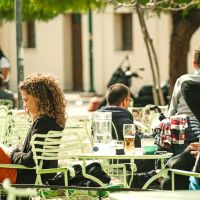
I arrived around 8pm and by 9 the place was already full. Today, its tables are shared by people of all ages and backgrounds - young men and women, middle-aged guests, elderly regulars, locals and loyal patrons who’ve come from further afield, Greeks and foreigners, students and businesspeople, workers and high earners. Yet here, everyone is equal; everyone leaves their worries at the door. Just as I did the first time I stepped in, 18 years ago.
Translation | Amaryllis Tsegou
Once upon a time in Piraeus
It was a Thursday evening and I had gone there with the photographer from the magazine I was working for at the time. Eidikon was the last place we needed to shoot before closing the March issue the following day.
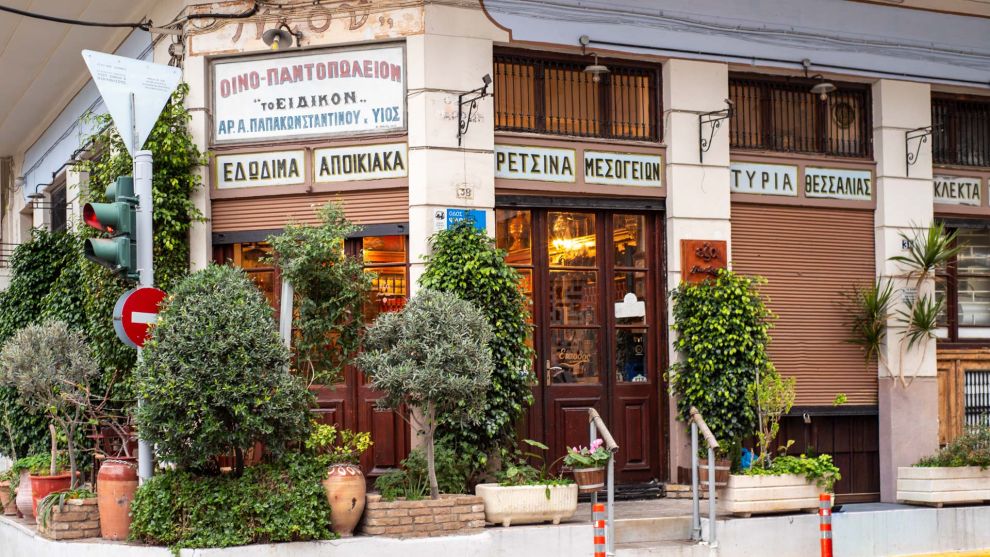
The pressure of the day was so intense that I forgot it wasn’t just any Thursday - it was Tsiknopempti, the night when everyone in Greece goes out to celebrate. We found it at the corner of Psaron and Salaminos streets, right where Piraeus begins to edge into Drapetsona and Tambouria.
Brightly lit inside and out, it stood impressively on a concrete base, reached by two small flights of steps. Tall triple doors surrounded it, music spilling out into the street, and the main sign made it unmistakable: “Oinopantopoleio To Eidikon, Ar. Papakonstantinou.” Below that, “Groceries & Colonial Goods” and around it smaller signs reading “cheeses,” “retsina,” and other tempting offerings.
We opened the door marked “Entrance” and stepped inside. A long communal table, like the one you see at weddings, took up most of the space. Around it, cheerful people were singing, someone was playing the bouzouki, others the guitar - the whole place felt like one big group, one shared spirit. Retsina flowed freely, while plates of mezze kept circulating.
When groups make history
Later on, I found out it was the customs officers’ group, who meet there every Wednesday for their fixed gathering, arriving early to eat and drink until the music and singing begin. The only exception is the week of Tsiknopempti - then they meet on Thursday instead.
For a few seconds, everything blurred and turned black and white, as if I had stepped into the set of an old Greek film, with only the carnival masks, garlands and streamers keeping their vivid colors. Mr. Apostolis, the owner, approached me and brought me back to reality.
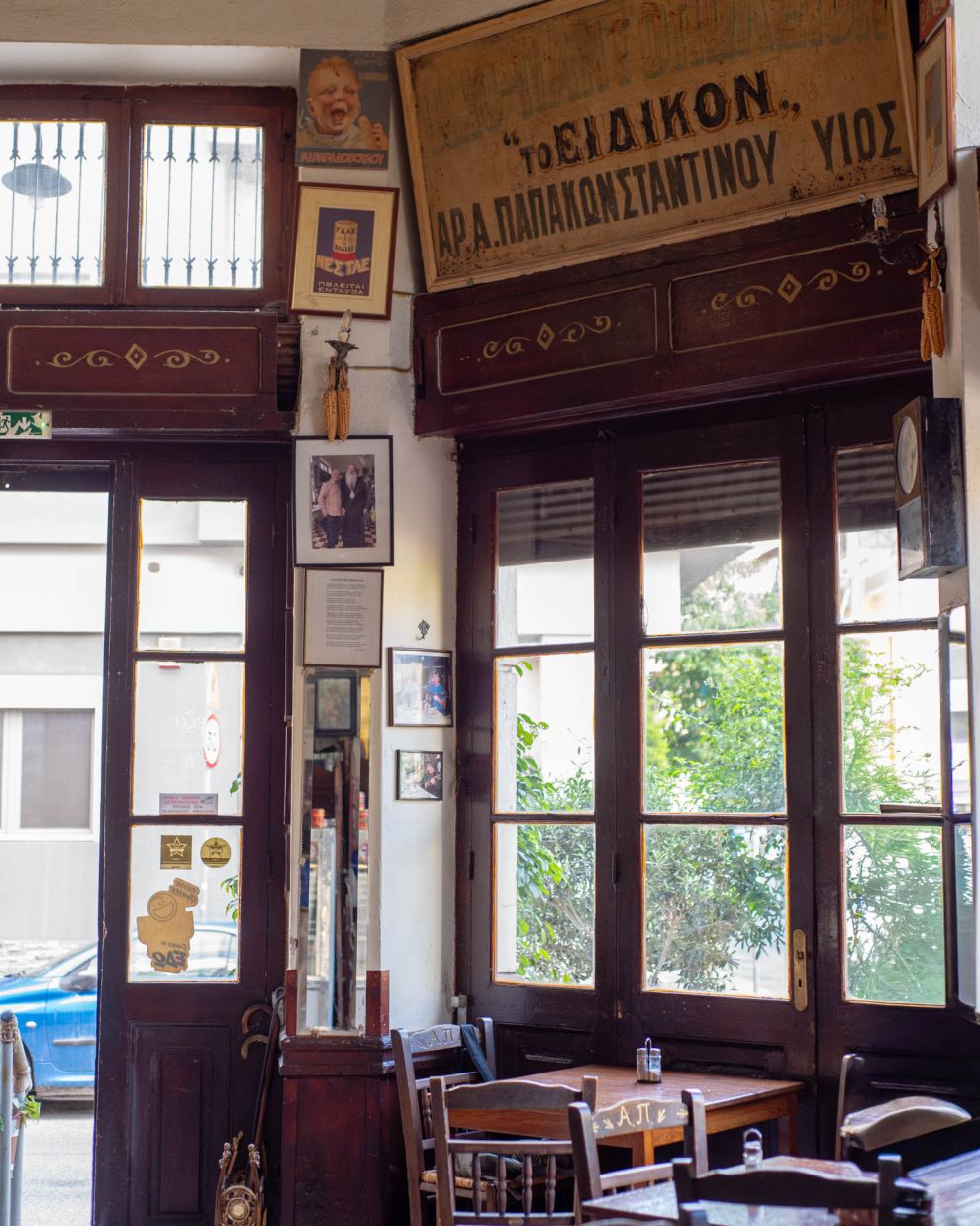
The décor
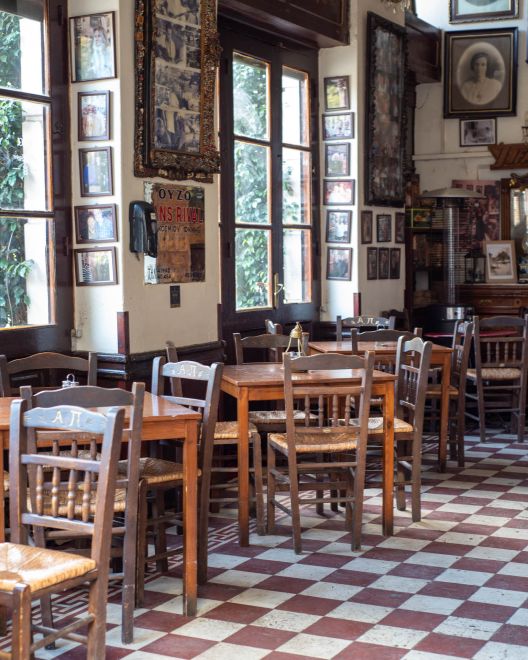
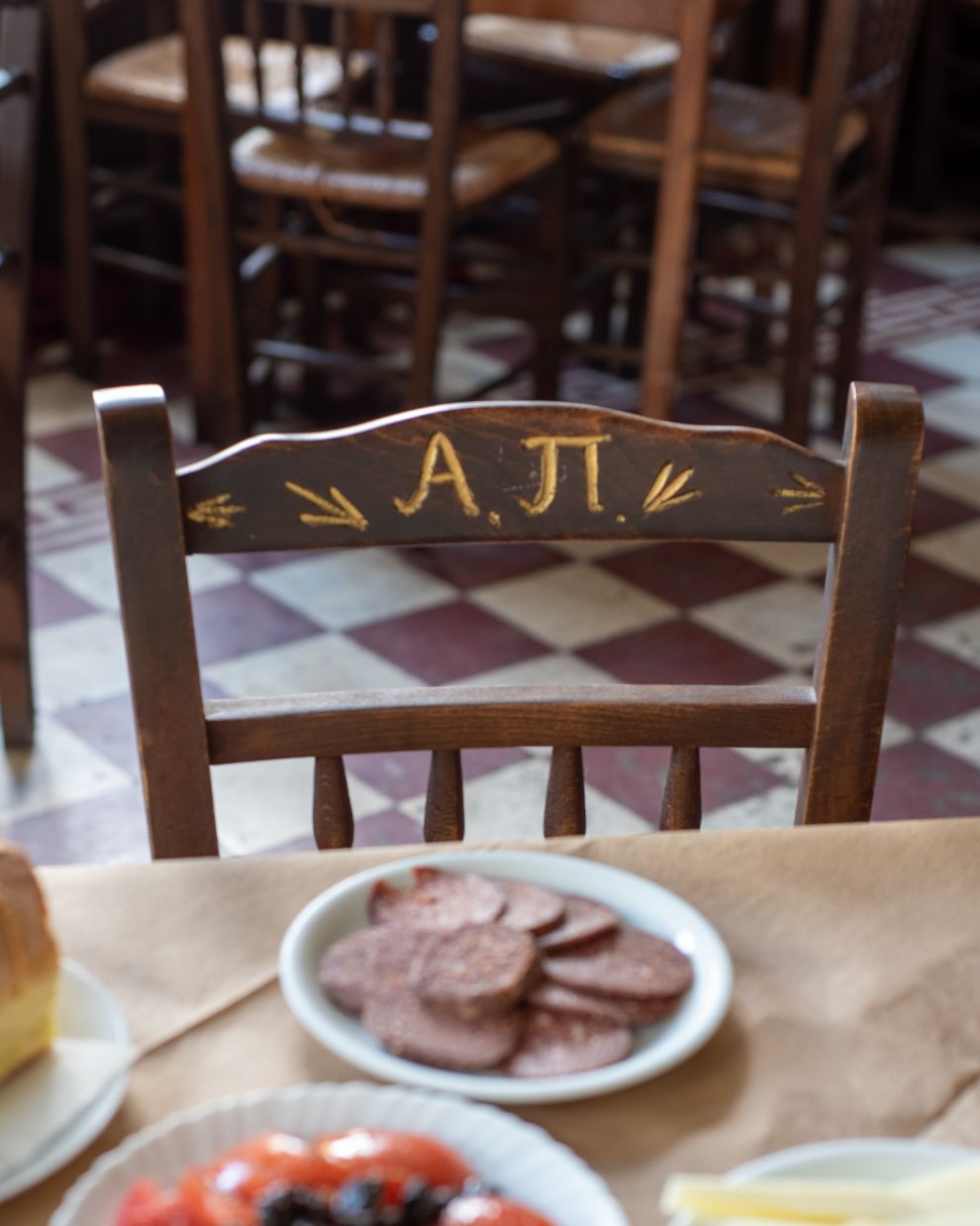
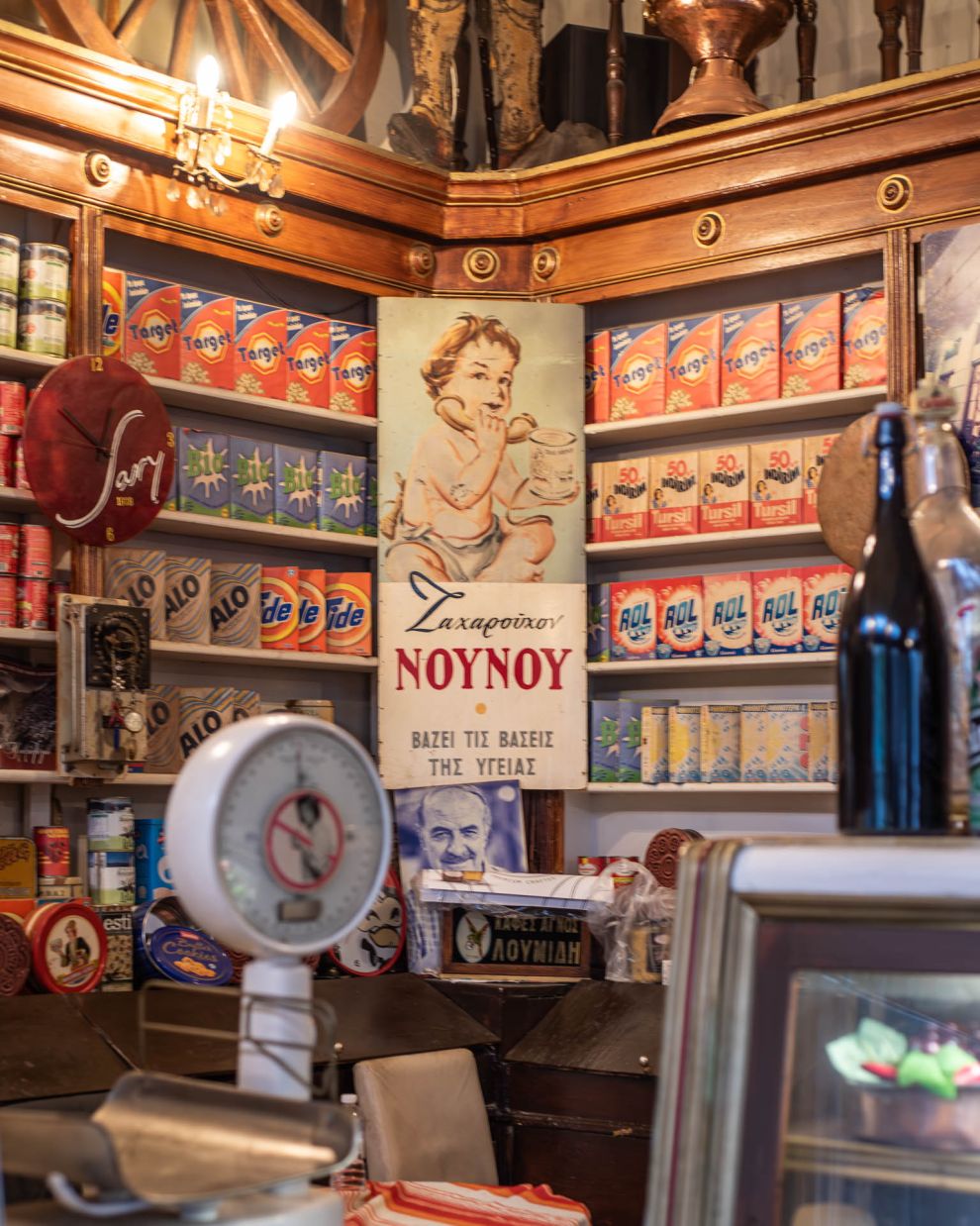
We did what we had to do and left, as the place was packed to capacity. But I managed to take in the burgundy and white floor tiles arranged in a checkerboard pattern, the hundreds of photos - famous and otherwise - covering the walls, the worry beads, clocks, mirrors and all sorts of trinkets hanging everywhere.
And of course, the old 1930s fridge with its carved wooden front, tins and cleaning products stacked high on the counters, old scales, radios, a phonograph, chandeliers, dried peppers and garlic hanging from a pipe along the ceiling.
An atmosphere that can’t be replicated
Years passed before I returned - recently, again with a photographer, this time for cookout.gr - only to realise that nothing had changed. Everything was exactly as I remembered it. I couldn’t help but think that no matter how hard a restaurateur or designer might try - and many have - it’s impossible to recreate such a place.
This atmosphere can’t be reproduced, because this place is more than its décor; it’s its truth, its simplicity, its authenticity. Every era and every life it has witnessed is etched into its very fabric like a tattoo. Its walls have seen and heard it all: displacement, wars, joys, sorrows, celebrations, everyday life, love stories beginning and ending, children growing up and becoming parents, young people turning into pensioners…
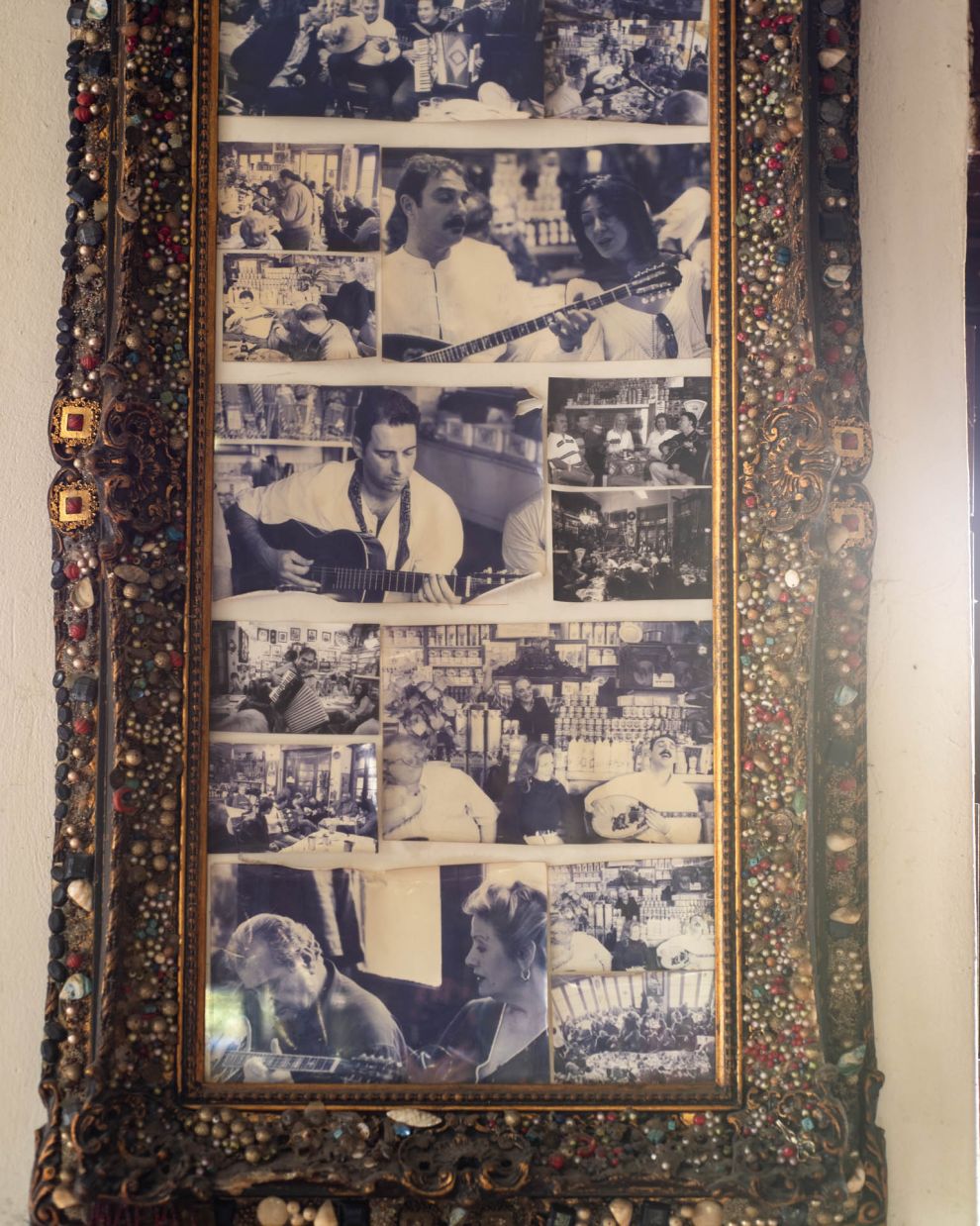
Grandfather Aristeidis, Apostolis, Voula, Maria and Aris
Although it’s Wednesday, the customs officers won’t be coming tonight due to the flu, Nikos the waiter tells me. I take a table next to the fridge and look around for Mr. Apostolis. Unfortunately, I’ve just missed him - he left earlier to rest. The same goes for Mrs. Voula, his lifelong partner. But I do meet Aris, their son and his sister Maria, who has taken over from their mother and now runs the kitchen.
Aris is named after his grandfather Aristeidis, a Piraeus native who opened the place in 1920. By day it was a grocery shop, by night a tavern, serving the retsina he made himself and stored in barrels in the basement, using must from Mesogeia. They still make their own retsina today…
It was served with tomatoes, olives and simple mezze (often from tins) cheese he brought from the dairy he ran with his brothers in Gardiki, Trikala, and perhaps some sausage. During the Occupation, the basement with the wine barrels often became a shelter for the family and neighbours, who hid there during German bombings. The bullet holes from that time are still visible on the old shutters, now rarely lowered.
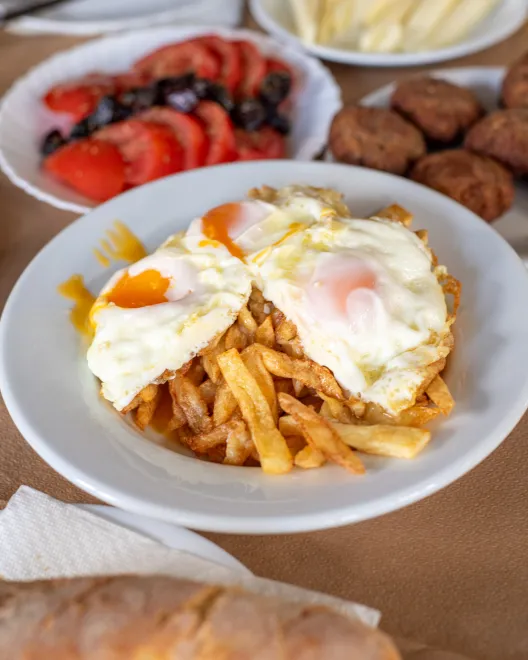
So, what’s on the menu?
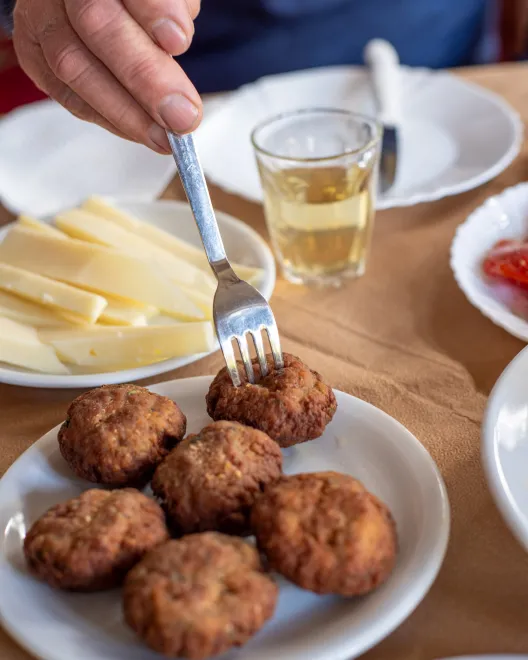
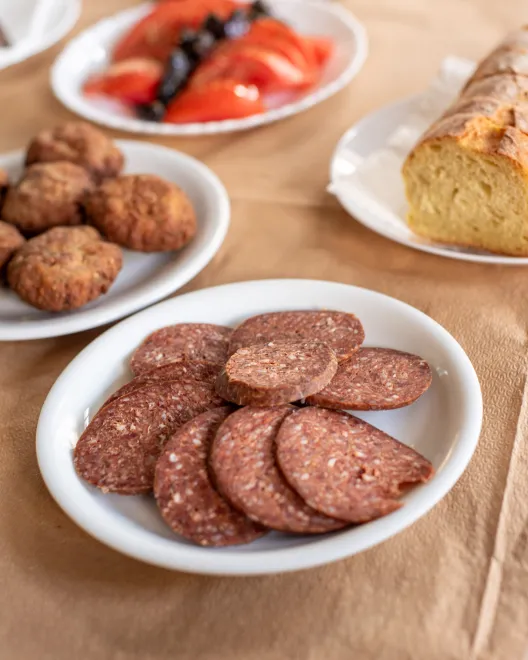
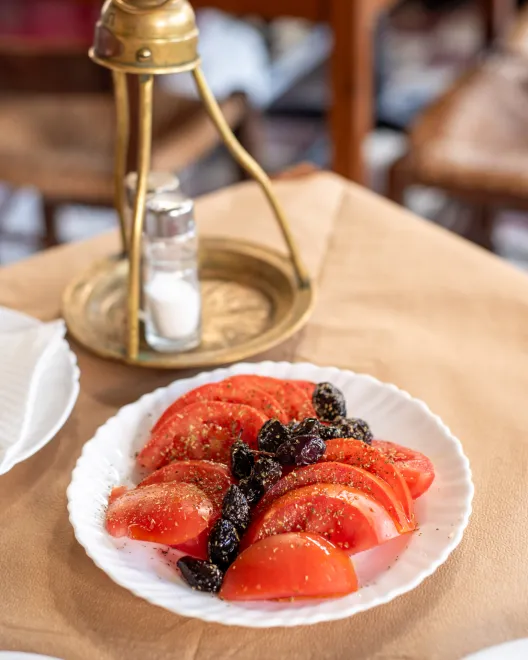
Even today, you’ll be served much the same. Tomato salad with select olives and excellent extra virgin olive oil. The feta comes separately - barrel-aged from Kefalonia - and there’s also kefalograviera from Amfilochia.
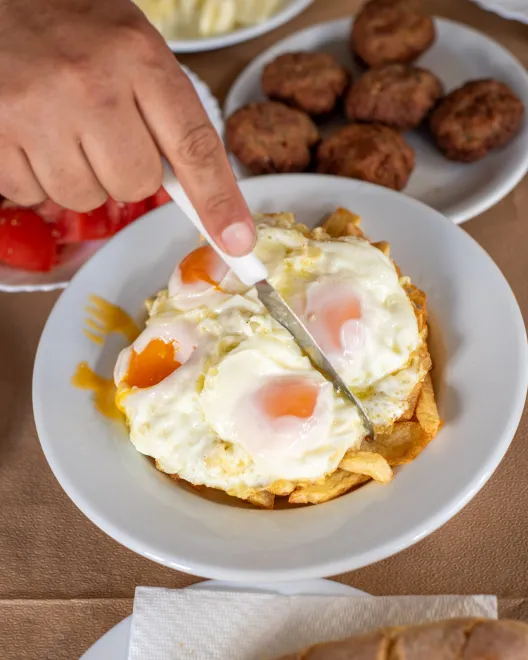
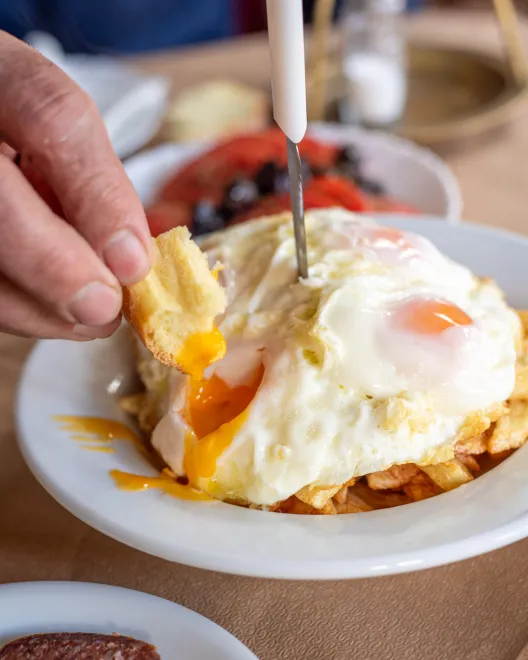
The fava is velvety, the meatballs fragrant and delicious, crispy on the outside, juicy inside, and their “tourta” features freshly fried potatoes at the base, topped with as many fried eggs as you like. The omelette is made with corned beef and the sausage comes from Trikala. There’s also fried liver and spicy soutzouki. If you’re a fan of retsina, you’ll pair your meze with their house version; if not, you can opt for a beer.
On Wednesdays and Saturdays, unless something unexpected comes up, you’ll enjoy all this accompanied by live music.
Note that you can also buy retsina, cheese and sausages to take home.
And one final tip: don’t head there without calling ahead to reserve a table.