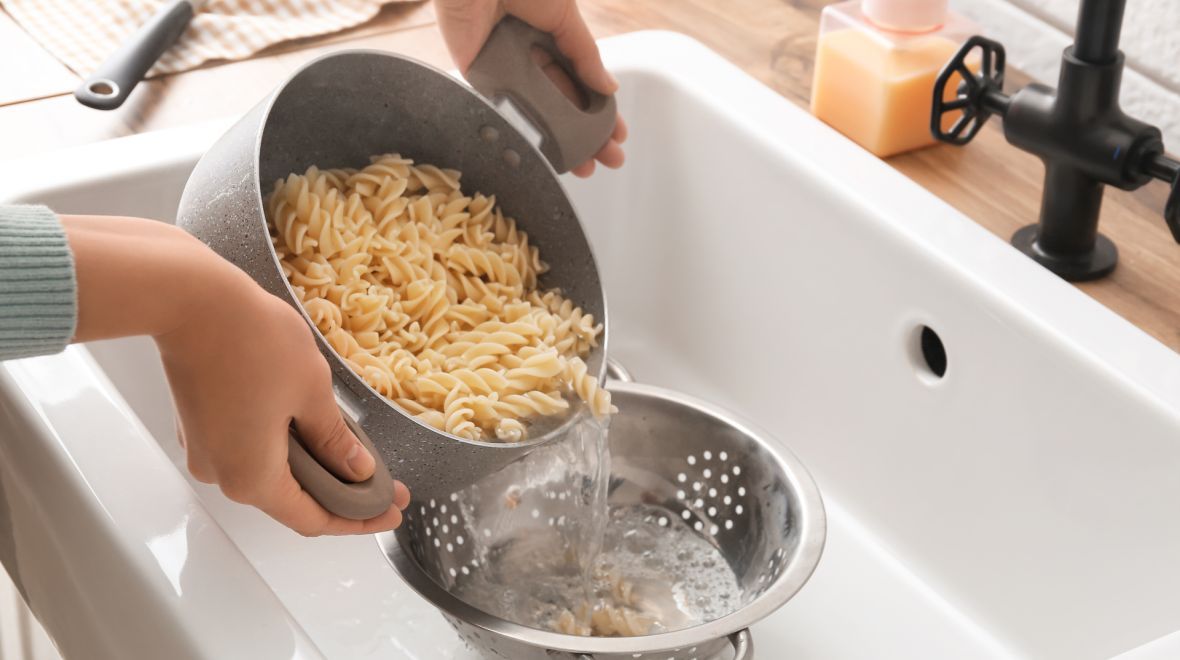

It’s an automatic step - you cook the pasta, check that it’s ready, grab the pot and tip it into the colander over the sink. It’s something we’ve always seen done, often the way our parents or grandparents did it too, so it feels completely normal. But have you ever stopped to think that this habit might not be so harmless for your plumbing system?
In many modern homes, pipes are made from plastic materials such as PVC, which are not designed to withstand very high temperatures. Repeated exposure to boiling water can gradually soften or warp them, increasing the risk of leaks or long-term damage to the drainage system.
Another issue relates to the fats and oils that often go down the sink from washing up. Boiling water can temporarily melt and carry these deeper into the pipes. However, as the water cools, the fats solidify again and stick to the inner walls, slowly building up blockages that are difficult to remove.
There can also be more immediate effects. The sudden contact between extremely hot water (around 100°C) and the sink surface can cause wear over time, especially on more delicate materials. This may lead to small cracks, dullness, or visible surface changes, which affect not only appearance but also durability.
What you can do
You might be thinking, “So where am I supposed to pour it - in the garden?” The answer is no, that’s not necessary, and in many cases not even possible.
Instead, simply let the water cool slightly before emptying the pot, or run the cold tap at the same time so the hot water is diluted as it goes down the drain. This small change is enough to protect both your pipes and your sink from unnecessary wear and tear.